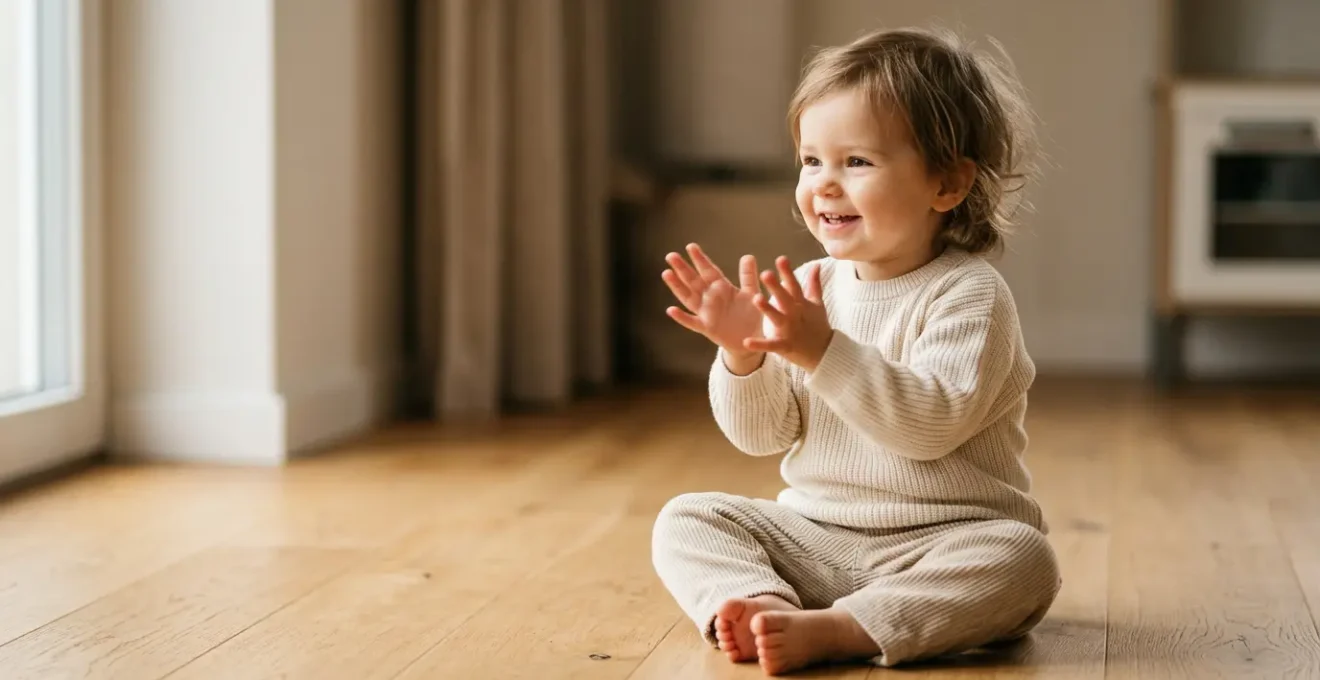
It’s more than just cute: your toddler’s wobbly dance is the essential groundwork for building a sophisticated brain and body.
- Rhythmic play builds a physical « body map » (proprioception) and strengthens the brain’s information superhighway (corpus callosum).
- Activities that cross the body’s midline are foundational for developing complex skills like reading and writing.
- Pausing and stopping games are the first, playful lessons in self-control and core executive functions.
Recommendation: Start with the simple, screen-free games in this guide to turn playtime into powerful developmental work.
As a pediatric occupational therapist, I see the magic happen on the floor, not in front of a screen. It’s in the joyful stomps, the off-beat claps, and the wobbly dances. To the casual observer, it’s just a toddler being a toddler. But to a developing brain and body, it’s vital engineering work. Parents often look for the « best » toys or apps to boost their child’s skills, thinking that motor development is about structured practice or complex equipment.
The common advice is to « sing nursery rhymes » or « dance together, » which is wonderful, but it often misses the profound « why. » It’s easy to focus on the end goal—better coordination—without understanding the building blocks. The real power isn’t just in the activity itself, but in the pulse that drives it. What if the key to unlocking your child’s physical potential wasn’t about precision, but about the pulse? What if the simplest, most universal element—rhythm—was the secret ingredient for building everything from balance to the very brain architecture needed for reading?
This guide will take you beyond the « what » and into the « how » and « why. » We will break down how specific rhythmic actions directly target and develop crucial motor and cognitive systems. We’ll explore how a game of pat-a-cake builds the foundation for catching a ball, how stomping in a puddle wires the brain for balance, and why drumming with both hands is a precursor to literacy. Forget expensive toys; your body, your voice, and a steady beat are the most powerful developmental tools you have.
This article provides a developmental tour through the most effective rhythm games and activities. Below is a summary of the key areas we will explore, showing how each playful activity contributes to a specific, vital area of your child’s growth.
Summary: Why Simple Rhythmic Activities Are Vital for Early Motor Development
- Pat-a-Cake to Polyrhythm: Building Hand-Eye Coordination Step-by-Step
- Gross Motor Skills: How Stomping Helps Balance and Gait
- Drumming Left and Right: Why Cross-Lateral Moves Help Reading Later
- The Freeze Game: Teaching Self-Regulation Through Silence
- Holding the Shaker: Developing Fine Motor Pincer Grasp
- Singing and Speaking: How Rhythm Helps Babies Learn Words
- Simon Says Rhythm: Copying Beats Without a Screen
- Best Rhythm Games to Teach Timing Before Starting Lessons
Pat-a-Cake to Polyrhythm: Building Hand-Eye Coordination Step-by-Step
It starts with the classics for a reason. Games like Pat-a-Cake, « If You’re Happy and You Know It, » and « The Wheels on the Bus » are more than just songs; they are foundational training for hand-eye coordination. When your toddler watches you clap and then tries to imitate the movement, they are engaging a powerful neural system. This isn’t just monkey-see, monkey-do; it’s the brain building a library of movement.
This process of observing, processing, and attempting to replicate an action is a complex workout. The rhythm of the song provides a predictable structure, a timeline for the action to occur. First, the child anticipates the « clap, » then they must coordinate their visual system (seeing the hands come together) with their motor system (sending the signal for their own hands to move). The auditory feedback of a successful clap provides instant reinforcement, telling their brain, « Yes, that worked! » This simple loop is the very beginning of mastering tools, writing, and catching a ball.
Case Study: The Role of Mirror Neurons
The ability to learn by imitation is deeply rooted in our neurology. Research demonstrates that the system of mirror neurons facilitates the process of purposeful movement formation in young children. As a child watches you perform a rhythmic action like clapping or tapping, the neurons in their brain that would be used to perform that same action begin to fire. This creates a « motor program » or a mental blueprint. With each repetition, this blueprint is refined, allowing the child to move from a clumsy attempt to a more coordinated and intentional action.
You can see this progression from the whole-hand smacking of Pat-a-Cake to the more refined ability to tap a finger for « Itsy Bitsy Spider. » Each new rhythmic game introduces a slightly more complex motor challenge, building on the skills that came before. It’s a natural, step-by-step curriculum for physical literacy.
Gross Motor Skills: How Stomping Helps Balance and Gait
When your toddler stomps their feet, they aren’t just making noise; they are sending a powerful signal to their brain. This is proprioception in action—the body’s sense of its own position, movement, and force. Every stomp, jump, or leap provides rich sensory information, helping to build a detailed « map » of the body in the brain. The firm impact with the ground tells them exactly where their feet are, how much force they are using, and how their body is aligned over its base of support.
Rhythm adds a critical layer to this process. Marching to a beat, jumping to a song, or stomping like a dinosaur in a rhythmic pattern helps organize these movements. It trains the vestibular system, located in the inner ear, which is the body’s command center for balance and spatial orientation. Rhythmic activities challenge this system in a predictable way, teaching the child to maintain their balance while starting, stopping, and changing direction. This is the very foundation of a stable gait, the ability to run without falling, and the confidence to navigate an uneven playground.
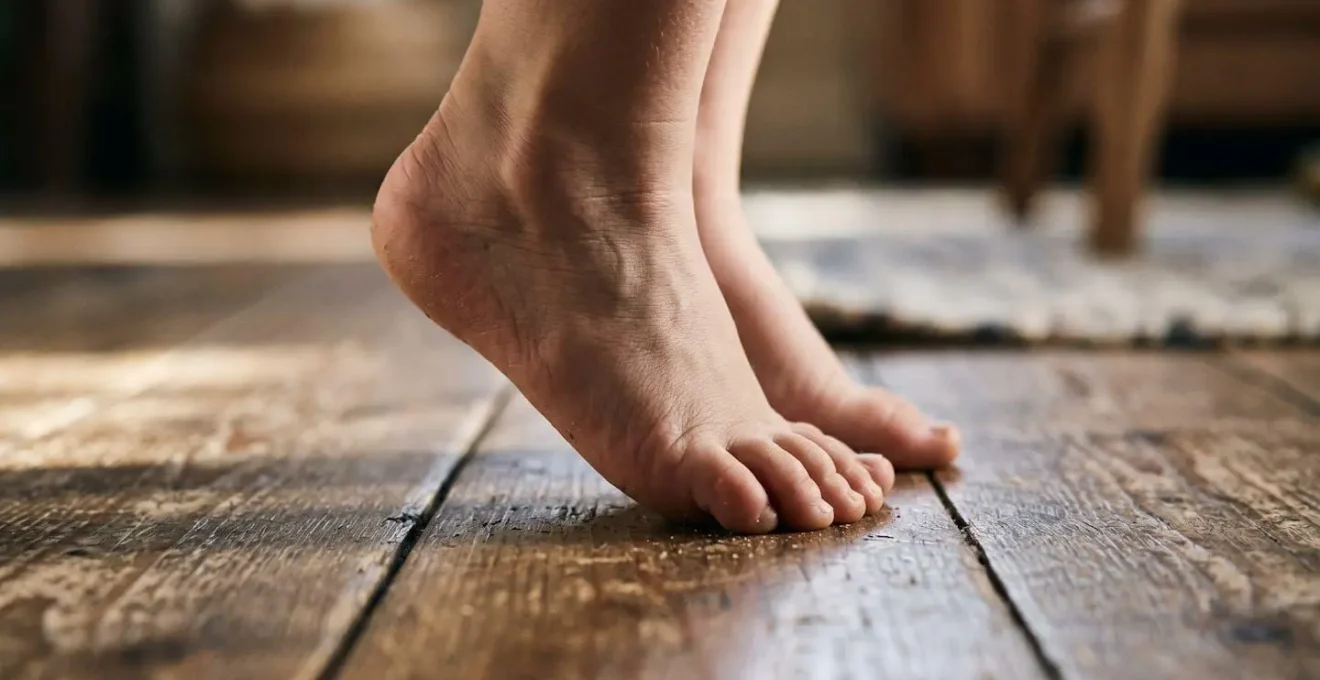
Think about a child learning to jump with two feet. Initially, it’s a disorganized, wobbly affair. But add the rhythm of a song like « Five Little Monkeys Jumping on the Bed, » and the movement becomes more coordinated. The beat provides the cue to bend their knees, push off, and land. This repeated, rhythmic practice strengthens the muscles of the legs and core while simultaneously refining the neural pathways responsible for dynamic balance. It’s a full-body workout that’s disguised as pure fun.
Drumming Left and Right: Why Cross-Lateral Moves Help Reading Later
Here’s one of the most incredible connections in child development: the simple act of crossing the midline of the body is a powerful primer for the brain’s ability to read. The « midline » is an imaginary line down the center of the body, and any movement that crosses it—like reaching your right hand to your left knee or tapping a drum on your left side with your right hand—is a cross-lateral movement.
Why is this so important? These movements require the left and right hemispheres of the brain to communicate through a thick bundle of nerve fibers called the corpus callosum. Every time a cross-lateral movement occurs, this neural bridge is activated and strengthened. A more robust and efficient corpus callosum allows for faster and more integrated processing of information between the two brain hemispheres, which is essential for complex cognitive tasks. As research on brain development shows that when movement is coordinated, neural pathways become more myelinated, enhancing efficient communication.
This is powerfully articulated by neurophysiologist Dr. Carla Hannaford, who explains the deep connection between movement and cognition.
Cross-lateral movements, like a baby’s crawling, activate both hemispheres in a balanced way. When both eyes, both ears, both hands and feet are being used equally, the corpus callosum orchestrating these processes between the two hemispheres becomes more highly developed. Because both hemispheres and all four lobes are activated, cognitive functioning is heightened and ease of learning increases.
– Carla Hannaford, PhD, Smart Moves: Why Learning Is Not All in Your Head
Think about the act of reading. It requires the eyes to track smoothly from left to right across a page, decoding symbols (a left-brain specialty) and comprehending meaning and context (a right-brain specialty). The rhythmic, cross-lateral activities you do with your toddler—crawling, drumming on alternating sides, or doing the « windmills » exercise—are literally building the neurological infrastructure they will one day use to read a book.
The Freeze Game: Teaching Self-Regulation Through Silence
Of all the rhythmic games, « Freeze Dance » may be the most important for developing a crucial life skill: self-regulation. The game is deceptively simple: you dance wildly when the music is on and freeze instantly when it stops. For a toddler, whose entire being is geared toward movement and impulse, this act of stopping is a monumental cognitive task. It’s a playful introduction to inhibitory control, a core component of executive function.
Executive functions are the high-level cognitive skills that allow us to plan, focus, remember instructions, and juggle multiple tasks. Inhibitory control is the ability to suppress a prepotent or automatic response in favor of a more considered one. In Freeze Dance, the impulse is to keep dancing. The task is to override that impulse and hold your body still. Each round of the game is a little rep in the brain’s « self-control » gym. This ability to « put on the brakes » is fundamental for everything from sitting still in a classroom to thinking before you speak.
The rhythm of the game, with its clear « on » and « off » phases, makes the task learnable. The silence is as important as the music. In that moment of silence, the child must actively inhibit their motor system. Doing this successfully leads to a feeling of mastery and fun, not punishment. It’s a far more effective way to learn control than being told to « stop running » or « calm down. » And the science backs this up; scientific studies demonstrate that inhibitory control develops rapidly during the preschool period and that training can show measurable improvements in cognitive ability.
Your Action Plan: Building Self-Regulation with The Freeze Game
- Identify Your Cues: Start with the most basic signals. Decide on your « go » (music playing) and « stop » (music silence) cues. This establishes the game’s core rule.
- Start Simple: Begin with a basic freeze dance. Play a favorite song, dance with abandon, and pause the music at random. The only goal is for your child to stop moving. Celebrate every successful freeze!
- Add a Challenge: Hold the Pose: Once they master stopping, add a new rule. When the music stops, they must freeze and hold the exact silly position they were in. This builds sustained motor inhibition, a tougher skill.
- Vary the Signal: Introduce new « stop » cues to train cognitive flexibility. Instead of just silence, shout « Statue! » or ring a small bell. This teaches them to respond to different types of signals, not just one.
- Master the Timing: Now, play with their anticipation. Alternate between long periods of dancing and very short bursts. This unpredictability strengthens impulse control as they can’t simply rely on habit.
Holding the Shaker: Developing Fine Motor Pincer Grasp
From the whole-body movements of stomping and dancing, we now zoom into the tiny, intricate muscles of the hand. The development of a mature pincer grasp—the ability to hold an object between the thumb and forefinger—is a hallmark of human dexterity and a critical precursor to writing, buttoning a shirt, and using utensils.
Rhythmic activities with small, handheld instruments are a perfect, playful way to encourage this. When a toddler first grabs an egg shaker, they will likely use a « palmar grasp, » clutching it in their fist. The sound it makes is a powerful motivator. As they shake, they receive an immediate auditory-motor feedback loop: their movement creates a sound. This encourages them to experiment. What happens if they hold it differently? What if they shake it faster, or slower, or tap it?
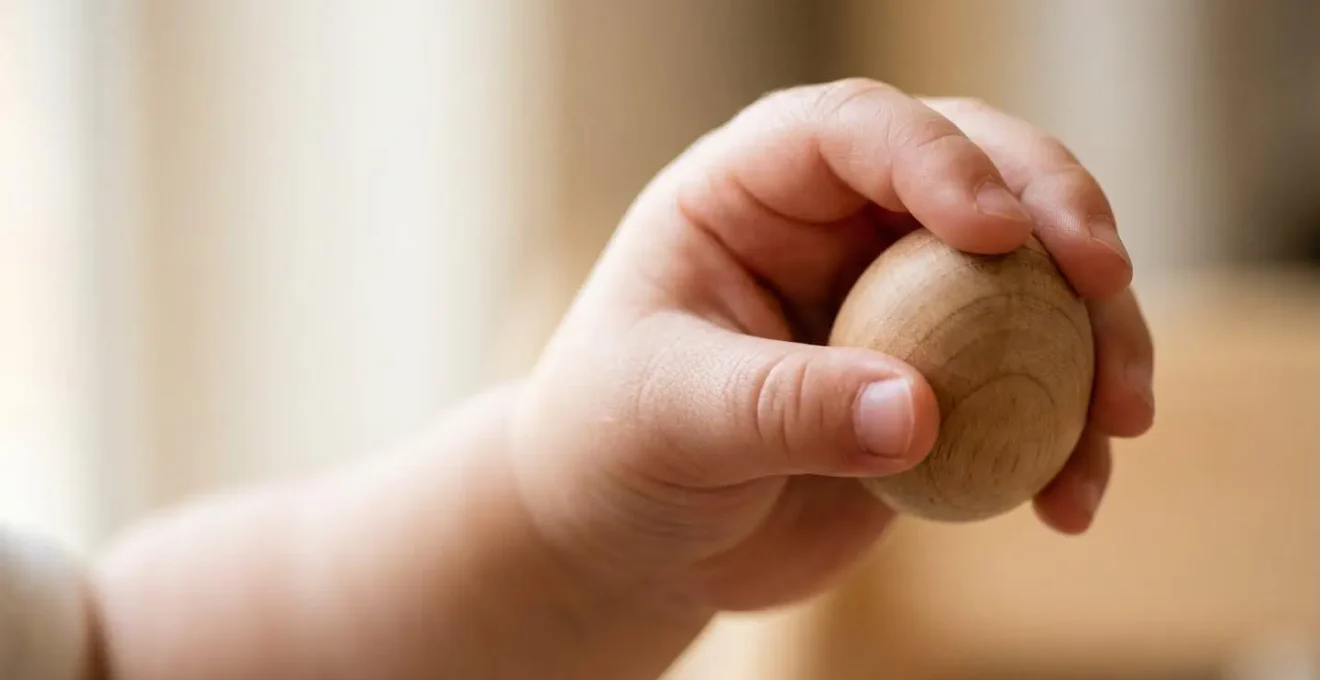
This experimentation naturally leads to a refinement of grip. To gain more control over the sound, they will begin to shift the instrument in their hand, moving it from the palm to the fingertips. This is where you might introduce instruments with a thin handle, like a small bell or a triangle striker. Holding these requires a more refined grip, nudging the fingers and thumb toward that pincer position. The rhythm provides the context and motivation for the practice. They aren’t « practicing their grip »; they are « making music. »
Developmental Progression: From Fist to Fingertip
The journey from a palmar grasp to a pincer grasp is a predictable developmental sequence. Music and rhythm can act as a catalyst for this journey. Research has shown that engaging with musical rhythm activities is highly beneficial for motor skills. The immediate sound feedback allows a child to self-correct and refine their hand and finger movements with increasing precision. Giving a child a large, two-handed shaker encourages the whole-hand grasp, while later providing a smaller, single-hand instrument like a maraca with a thin handle naturally facilitates the transition towards the more dexterous pincer grip, essential for future tool use.
Singing and Speaking: How Rhythm Helps Babies Learn Words
Before a baby understands a single word, they understand its music. The rhythm, pitch, and flow of language—its prosody—are the first things a baby’s brain latches onto. When you speak or sing to a baby in that melodic, sing-song voice (« parentese »), you are exaggerating the rhythmic contours of the language, making it easier for their developing brain to process.
One of the first major tasks in language acquisition is figuring out where one word ends and the next one begins. To a baby, adult speech sounds like a continuous, unbroken stream of sound. Rhythm and melody are the clues that help them parse this stream. The predictable patterns in nursery rhymes and simple songs provide a framework. The stressed syllables and rhythmic pulse act like signposts, helping the baby’s brain start to segment the flow into meaningful chunks, or words. It’s no surprise that research shows that developing musical rhythm abilities may aid the development of language processing.
There’s also a powerful connection through imitation. A baby learns to speak by trying to vocally mirror the sounds they hear. This process is deeply ingrained and happens almost automatically in the brain.
Rates of vocabulary expansion link to the ability of children to vocally mirror non-words and so to acquire the new word pronunciations. Such speech repetition occurs automatically, fast and separately in the brain to speech perception.
– Mirror Neuron Research, Wikipedia – Mirror Neuron
When you sing a simple, repetitive song like « Row, Row, Row Your Boat, » you are giving your child a predictable, rhythmic vocal pattern to latch onto and try to imitate. Their first « baba » or « dada » sounds are often rhythmic babbling, the motor practice for future speech. The rhythm of the song makes the vocal motor plan simpler and more achievable. In this way, singing is not just an adjunct to language learning; it is an integral part of the machinery that builds it.
Simon Says Rhythm: Copying Beats Without a Screen
The simple game of « copy me » is a cognitive powerhouse. When you clap a simple rhythm and ask your child to echo it back, you are giving their working memory a significant workout. Working memory is the brain’s « sticky note » system—the ability to hold a piece of information in mind for a short period while manipulating it. To copy your rhythm, a child must:
- Listen and pay attention to the pattern.
- Hold the pattern (e.g., « stomp-clap ») in their mind.
- Plan the motor sequence needed to replicate it.
- Execute the movement.
- Compare their result to the original pattern.
That’s a lot of complex processing for a seemingly simple game! This skill is crucial for academic success, as research demonstrates that executive function is associated with success in math and literacy. Rhythm-copying games are a fantastic, screen-free way to build this essential cognitive muscle. You can easily adjust the difficulty to keep it challenging but not frustrating, a process known as scaffolding.
Start simply and build complexity gradually. For the youngest toddlers, just echoing a single clap is a huge achievement. As they grow, you can introduce more complex patterns. The key is to make it a playful, interactive turn-taking game. Your enthusiasm and praise are the biggest motivators. This isn’t a test; it’s a conversation through rhythm. Each successful echo builds not only cognitive skills but also the social-emotional connection that comes from being « in sync » with a loved one.
Key Takeaways
- Rhythm Builds the Brain: Activities that cross the body’s midline, like drumming or crawling to a beat, physically strengthen the connection between the brain’s hemispheres.
- Big Muscles First: Gross motor skills (like balancing and stomping) provide the stable foundation upon which fine motor skills (like pincer grasp) are built.
- Self-Control is a Skill: Games that involve starting and stopping, like Freeze Dance, are the most playful and effective way to teach a child’s brain inhibitory control.
Best Rhythm Games to Teach Timing Before Starting Lessons
Before a child can learn to play a musical instrument, they must first internalize the most fundamental element of music: a steady beat. This sense of timing, or « pulse, » is not something we are born with; it’s a skill that is developed through physical experience. The good news is that you don’t need formal lessons or expensive instruments to build this foundation. The best tools are your own body, your environment, and a little imagination. And it doesn’t take much; according to research in physical education, all you need is 2-3 minutes of rhythmic movement at a time to prime the brain for learning.
The goal of these games is not to create a metronome-perfect musician but to help your child feel the pulse in their own body. It’s about making the abstract concept of « beat » a concrete, physical reality. When a child can feel the steady « thump-thump-thump » of a beat, they have a framework on which all future musical and motor learning can be built. Here are a few simple, foundational games you can play anywhere:
- The Human Metronome Game: This is the most basic and powerful game. One person walks at a very steady, deliberate pace. The other person’s job is to clap on each footstep. Then switch roles. This directly connects the feeling of a steady pulse in the legs with the sound of a clap.
- The Rhythm Story Game: Use rhythm to tell a story. « We’re tiptoeing past a sleeping giant! » (slow, soft taps on the floor). « Now we’re galloping on a horse! » (fast, alternating pats on the thighs). This links rhythm to emotion and imagination, making it more memorable.
- The Kitchen Orchestra: Daily routines are full of rhythm. Find the beat in the steady chop-chop-chop of a knife on a cutting board, the whisk-whisk of eggs, or the sound of stirring a pot. Give your child two spoons and let them tap along on different pots and pans to explore rhythm and pitch.
- The Conductor Game: Have one person be the « conductor. » With hand gestures, the conductor controls the family « orchestra » (clapping, stomping, singing « la »). A big, fast motion means loud and fast; a tiny, slow motion means quiet and slow. This teaches responsiveness and the concepts of tempo and dynamics.
These games lay the groundwork, making any future formal instruction much more intuitive and successful. You are giving your child the gift of internal rhythm, a skill that will serve them not just in music, but in sports, dance, and all coordinated movement.
The most important thing to remember is that this is play, not a test. Embrace the noise, celebrate the wiggles, and know that every beat is building a stronger, more capable, and more confident child. Your next step is simple: pick a game, put on some music, and start moving together.