In summary:
- Shift your mindset from « teaching » music to « playing » with sound in a pressure-free environment.
- Use everyday objects, storytelling, and body movement to make musical concepts tangible and fun.
- Focus on process over product, celebrating experimentation and creative noise-making.
- When considering lessons, prioritize finding a mentor whose teaching style matches your child’s personality.
- Simple rhythmic activities are a powerful, science-backed way to support early motor and brain development.
As a parent, you want to give your child every advantage, and the benefits of a musical education are well-known. But this desire often comes with a nagging anxiety: how do you introduce music without turning it into another dreaded chore? We’re often told to « start lessons early » or « encourage daily practice, » advice that can quickly lead to power struggles and extinguish the very spark we hope to ignite. This pressure to « do it right » can make the whole endeavor feel overwhelming, risking that the violin gathers dust and the piano becomes just another piece of furniture.
The common approach is to focus on formal instruction, structured goals, and the end product—a perfectly played recital piece. But what if the true key to fostering a lifelong love of music isn’t about mastering scales, but about joyful exploration? What if, instead of ‘teaching’ music, we started by simply ‘playing’ with sound? The secret lies in reframing our role from that of an instructor to that of a co-adventurer in a world rich with rhythm, melody, and texture. It’s about creating a playful, pressure-free environment where musical discovery feels as natural as learning to speak.
This guide will walk you through eight practical, child-led strategies to cultivate that genuine connection. We’ll explore how to transform your kitchen into an orchestra, turn stories into soundscapes, and understand the profound link between a simple clap and complex brain development. Prepare to leave the pressure behind and embrace the joy of improvised noise.
To help you navigate this journey of musical discovery, we’ve structured this article into key areas of exploration. You can follow along step by step or jump to the section that piques your curiosity the most.
Contents: How to Cultivate a Natural Love for Music in Children
- The Kitchen Orchestra: Making Instruments from Recyclables
- Peter and the Wolf style: Associating Characters with Instruments
- When to Clap: Preparing Children for Their First Live Show
- Touch and Try: Letting Kids Handle Real Instruments Safely
- Fun vs Strict: Finding a Mentor Who Matches Your Child’s Energy
- Improvised Noise: Encouraging Divergent Thinking with Instruments
- Pat-a-Cake to Polyrhythm: Building Hand-Eye Coordination Step-by-Step
- Why Simple Rhythmic Activities Are Vital for Early Motor Development?
The Kitchen Orchestra: Making Instruments from Recyclables
The first step in making music accessible is to shatter the myth that it requires expensive, specialized equipment. Your home is already a treasure trove of sonic potential, waiting to be discovered. By transforming recyclables and everyday objects into a « kitchen orchestra, » you teach a powerful lesson: music is not something you buy, but something you make and find everywhere. This approach reframes instruments as tools for exploration rather than precious objects to be handled with fear.
Start by gathering materials: plastic bottles can become shakers filled with rice or beans, tin cans covered with balloons transform into surprisingly resonant drums, and a simple cardboard box strung with rubber bands becomes a rudimentary guitar. The beauty of this process is in the experimentation. A child can directly observe how a thicker rubber band produces a lower pitch, or how a glass bottle sounds different from a plastic one. According to educational specialists, research shows that creating homemade instruments teaches sustainability and engineering principles alongside musical concepts like timbre and pitch. This hands-on creation process gives a child a sense of ownership and agency over their musical journey from the very beginning.
The goal isn’t to create a perfectly tuned orchestra, but to foster curiosity and prove that sound can be shaped and controlled. It’s a low-stakes, high-reward activity that emphasizes creativity over correctness, setting a foundational tone of fun and discovery for all future musical interactions. The kitchen orchestra is the ultimate permission slip to make noise, experiment, and play.
Peter and the Wolf style: Associating Characters with Instruments
Once children understand that they can create sound, the next step is to show them how sound can tell a story. Music is a language, and like any language, it can paint pictures, evoke emotions, and create characters. The most famous example of this is Sergei Prokofiev’s « Peter and the Wolf, » a symphonic fairy tale that has introduced generations of children to the instruments of the orchestra by associating each one with a character in the story.
You can adopt this brilliant method at home without needing a full orchestra. Pick a favorite storybook and assign different sounds or simple homemade instruments to each character. Perhaps a deep « booom » from a cardboard box drum represents the giant, while a high-pitched « ting » from a spoon on a glass is the fairy. This isn’t just about making sound effects; it’s about creating a musical motif—a recurring sound that represents a person, place, or idea. This teaches active listening and helps children understand how music can carry meaning and narrative structure.
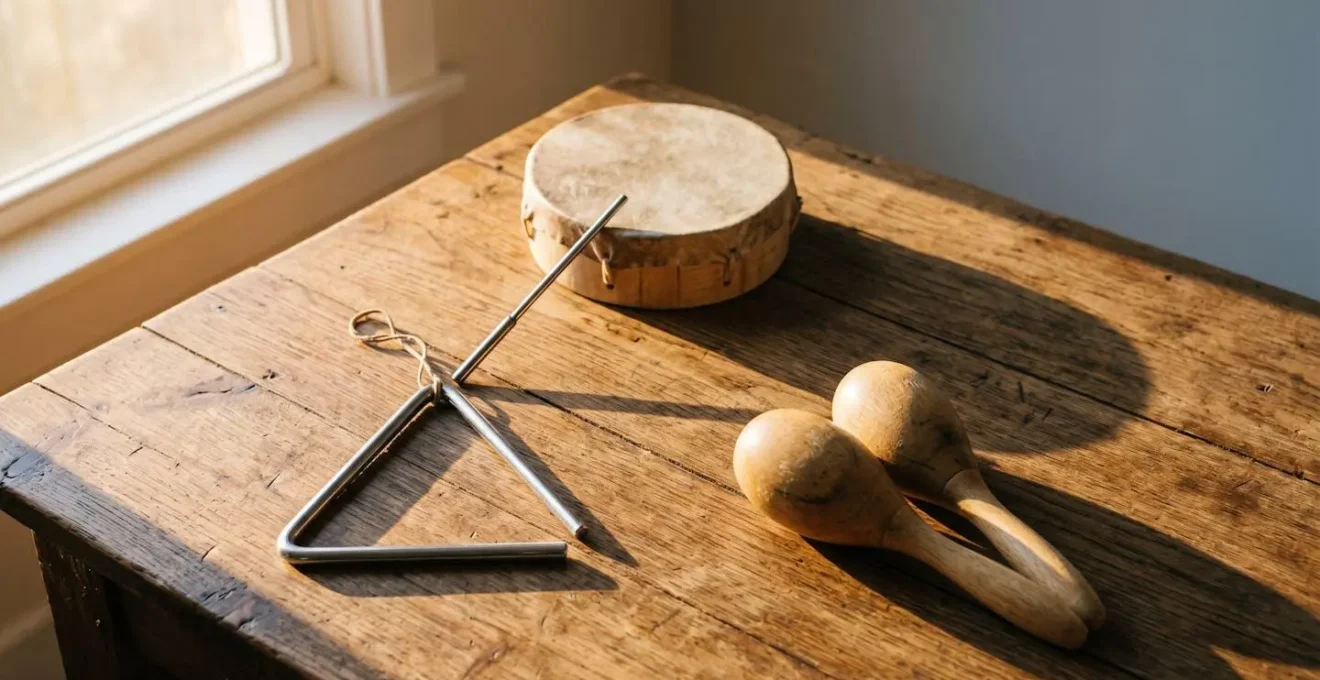
This technique transforms passive listening into an active, creative partnership. As children build their own soundscapes for stories, they begin to grasp fundamental concepts of composition and orchestration in a way that is intuitive and deeply engaging. They are not just hearing a story; they are helping to tell it through sound.
Case Study: How « Peter and the Wolf » Turns Listening into Learning
Since its composition in 1936, « Peter and the Wolf » has been a go-to tool for music educators worldwide. As documented by resources like those dedicated to Orff-based teaching, modern educators have evolved this experience. They now encourage students to move beyond passive listening by creating their own stories. In a classroom or at home, a child might use different percussion instruments to represent family members or pets, with each assigned a unique rhythm or sound, turning a simple narrative into a personal, interactive musical composition.
When to Clap: Preparing Children for Their First Live Show
Experiencing music live is a magical, multi-sensory event that can solidify a child’s budding interest. However, for a young child, the formal environment of a concert hall can be intimidating and confusing. The unspoken rules—when to be quiet, when to sit still, and the all-important question of when to clap—can cause anxiety for both parent and child. Preparing them beforehand transforms the experience from a test of etiquette into an exciting adventure.
The key is to demystify the experience. Before the show, listen to the music you will hear at home. Talk about the story, the instruments, and the performers. Frame it as a special event. According to the National Association for the Education of Young Children (NAEYC), explaining concert etiquette is crucial. You can practice at home: clap after a song finishes, stay quiet while the « musicians » (you and your child) are playing. One of the most helpful tips is to watch the conductor; they will usually signal when it’s time to applaud by lowering their hands. Turning this into a game of « spot the signal » can keep a child engaged.
During the performance, transform passive listening into an active « treasure hunt. » Create a mental or physical checklist: can you count the violins? Can you spot the person playing the triangle? Can you hear a moment of total silence? This focuses their attention and energy. While quiet attentiveness is the goal, honest reactions like laughter are often welcome. The most important thing is that they feel part of a shared experience. As one expert points out, a child’s focused engagement can even elevate the performance itself.
Children’s attention to the performer actually improves the artist’s performance.
– Concert etiquette expert, Maestro Classics – Concert Etiquette Guide
Touch and Try: Letting Kids Handle Real Instruments Safely
While homemade instruments are fantastic for initial exploration, there is a unique magic in touching and holding a real musical instrument. The weight of a guitar, the cool smoothness of a flute’s keys, or the taut vibration of a drum skin provides a rich sensory experience that a plastic toy cannot replicate. Providing a safe, supervised opportunity for this hands-on exploration is a crucial step in building a physical connection to music.
One of the best ways to facilitate this is by organizing an « instrument petting zoo. » You don’t need to own a music store’s worth of inventory. You can invite friends or family to a gathering where each adult brings one instrument they own—a guitar, a keyboard, a bongo drum, a recorder. Set up different « stations » around a room, allowing children to rotate and spend a few minutes with each instrument. This approach provides variety and makes the experience feel special and communal.
The most critical component is establishing rules for gentle handling. Instead of a list of « don’ts » (‘don’t break it,’ ‘don’t drop it’), use positive, metaphorical language. PBS Learning Media suggests a « heartbeat rule, » teaching kids to use a gentle touch. You might say, « Pet the guitar strings like you’re stroking a kitten, » or « Press the piano keys gently, like you’re waking them up from a nap. » This fosters respect for the instrument without inducing fear. Supervise each station to guide their hands, answer questions, and celebrate the weird and wonderful sounds they discover. This experience is not about teaching them to play correctly; it’s about satisfying their curiosity and making these mysterious objects feel friendly and approachable.
Fun vs Strict: Finding a Mentor Who Matches Your Child’s Energy
There may come a time when your child’s curiosity outpaces what you can facilitate at home, and the idea of formal lessons arises. This is a pivotal moment. The choice of a teacher or mentor can be the single most important factor in determining whether your child’s musical journey blossoms or withers. The goal is not to find the most technically proficient virtuoso, but to find a mentor whose teaching philosophy and personality align with your child’s learning style.
Is your child a boisterous enthusiast who needs to move, or a quiet observer who needs patience and space? A strict, classically-minded teacher might be a perfect fit for one child and a disaster for another. The modern music educator understands this, blending structured learning with play, creativity, and student-led exploration. They see their role as a guide, not a drill sergeant. Before committing to any teacher, always insist on a trial lesson. This is not just for the teacher to assess your child, but for you and your child to assess the teacher.
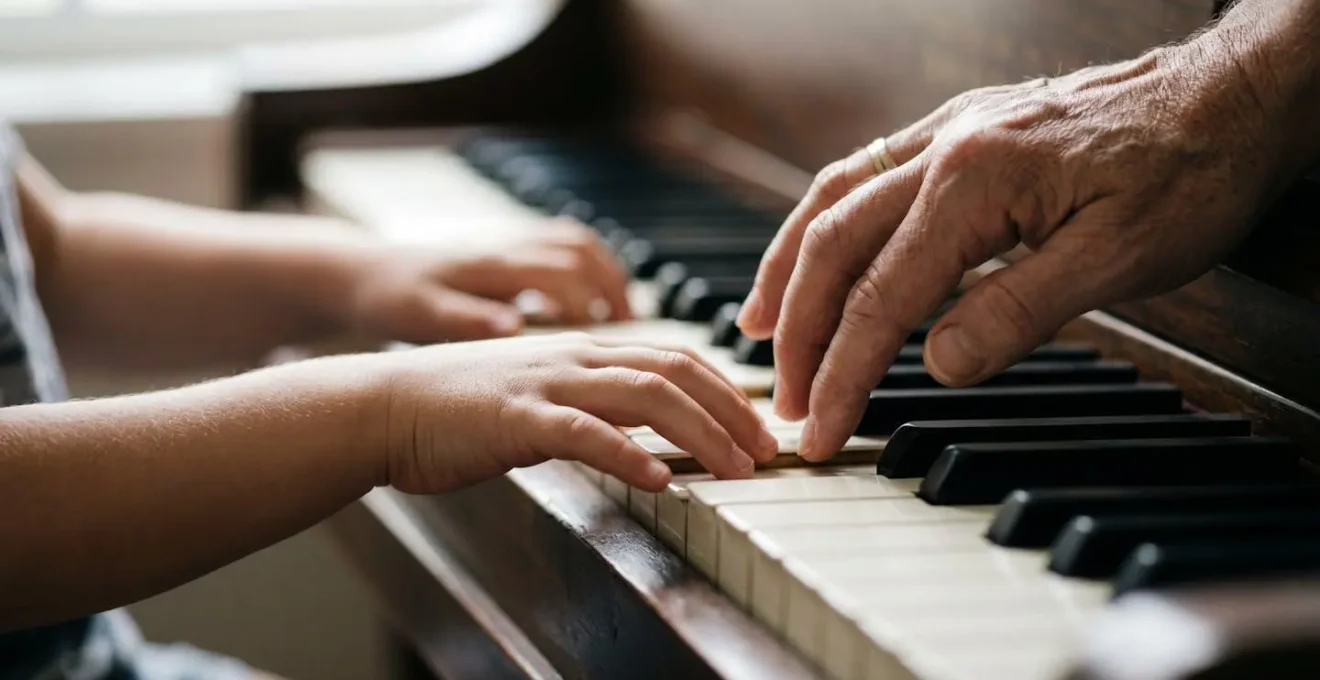
During this trial, observe the interaction. Does the teacher get down on the child’s eye level? Do they celebrate small attempts and reframe « mistakes » as « interesting sounds »? Do they smile? A good mentor for a young child creates an environment of psychological safety where experimentation is encouraged and frustration is met with empathy, not criticism. Finding this right fit is more important than the instrument itself.
Your Checklist for a Trial Music Lesson: Finding the Right Fit
- Ask: ‘How do you handle frustration or lack of motivation in young students?’ Look for answers that emphasize encouragement over criticism and patience over pressure.
- Ask: ‘How do you incorporate play and creativity into lessons?’ A great teacher will talk about games, improvisation, or storytelling, not just scales and exercises.
- Ask: ‘Can my child suggest songs they already love to learn?’ A teacher who is flexible with repertoire is more likely to keep a child engaged and motivated.
- Ask: ‘What is your teaching philosophy for beginners?’ Match their answer to your child’s personality. Do they value structure above all, or do they prioritize exploration?
- Observe: Watch the interaction closely. Does the teacher connect with your child, speak encouragingly, and celebrate the small wins and curious questions?
Improvised Noise: Encouraging Divergent Thinking with Instruments
In a traditional music lesson, the focus is often on convergent thinking: learning to play the « right » notes in the « right » order to reproduce a piece of music. While this is a valuable skill, it’s only half the picture. To truly foster a creative relationship with music, we must also encourage divergent thinking—the art of exploration, improvisation, and generating a wide range of ideas. This means creating space for what might just sound like « improvised noise. »
The fear of making a mistake is one of the biggest inhibitors to creativity. By actively encouraging your child to find the « silliest, » « ugliest, » or « weirdest » sound their instrument can make, you remove that fear. This gives them permission to explore the full sonic palette of the instrument, not just the conventionally « pretty » sounds. It reframes « mistakes » as discoveries and teaches them that every sound has potential.
You can structure this exploration through simple improvisation games. These games are not about technical skill, but about listening, reacting, and communicating musically.
- Call-and-Response: You play a short, simple rhythm, and your child « answers » with their own. This teaches the fundamentals of musical dialogue.
- Emotion Soundscapes: Pick an emotion—happy, sad, angry—and ask your child to create a sound that feels like that emotion. This connects music directly to feeling, without the need for words.
- The One-Note Challenge: Challenge them to create a whole song using only one note. They can change the rhythm, the volume (loud/soft), and the texture (short/long, smooth/choppy). This brilliantly demonstrates how creative constraints can spark incredible innovation.
These activities teach the core of musicality: that music is a form of personal expression, not just a technical exercise. It’s in these moments of free, improvised play that a child’s unique musical voice begins to emerge.
Pat-a-Cake to Polyrhythm: Building Hand-Eye Coordination Step-by-Step
Before a child can master the complex fine motor skills needed to play an instrument, they must first master the instrument they are born with: their own body. Body percussion—using stomps, claps, snaps, and pats to create rhythm—is an incredibly powerful and accessible tool for development. It connects the abstract concept of rhythm to a tangible, physical experience, building a crucial foundation for future musical learning.
The progression from simple to complex movements helps build coordination in a logical, step-by-step manner. According to studies that confirm that playing a musical instrument enhances dexterity, these foundational body-rhythm activities are a direct precursor to that skill. A typical progression might look like this:
- Gross Motor: Start with big, simple movements like stomping feet to a steady beat. This develops a basic sense of pulse and large muscle coordination.
- Bilateral Coordination: Move on to clapping hands together. This requires both sides of the body to work in sync.
- Cross-Lateral Movement: Progress to patting opposite knees (right hand to left knee, left hand to right). This action of crossing the body’s midline is a critical milestone for brain development.
- Fine Motor Control: Introduce more precise movements, like finger snapping, into the pattern.
- Polyrhythm: For an advanced challenge, try creating two rhythms at once—for example, maintaining a steady stomp with the feet while clapping a different, more complex pattern with the hands.
This progression, from the simple pulse of a « Pat-a-Cake » game to the complexity of a polyrhythm, is not just a musical exercise. It’s a comprehensive workout for the brain and body, directly building the neural pathways and motor skills essential for everything from writing to sports to, eventually, playing an instrument.
Key takeaways
- True musical engagement is born from playful exploration, not rigid instruction. Reframe your role from teacher to playmate.
- The best first instruments are free. Use recyclables and household objects to teach that music is about creativity, not consumption.
- Connect sound to storytelling and emotion to give music meaning beyond just notes. A soundscape for a favorite book is a powerful learning tool.
Why Simple Rhythmic Activities Are Vital for Early Motor Development?
It can be tempting to see the playful activities in this guide—the clapping games, the kitchen-pot drumming, the silly sound challenges—as merely fun distractions before the « real » learning begins. This is a profound misunderstanding. Far from being trivial, these simple rhythmic activities are one of the most vital components of early childhood development. They are the foundational work that makes all future, more complex learning possible.
Neuroscience provides a clear picture of what’s happening. When a child engages in a rhythmic activity, like clapping a beat or responding to a musical cue, their brain is firing on all cylinders. As Dr. Emily Dollman, a researcher in music education, explains, rhythm is fundamental to cognitive organization. It’s not just about music; it’s about building a better brain. Indeed, neuro-musical research highlights that music education is positive for brain development, particularly impacting auditory processing, executive function, and working memory—skills essential for academic success.
Rhythm helps synchronize the brain’s hemispheres, strengthens neural pathways, and provides a foundation for complex skills like language and math.
– Dr. Emily Dollman, University of Adelaide Research on Music Education
The impact is measurable and significant. The coordination required to stomp, clap, or tap in time builds the same pathways needed for the fine motor control of holding a pencil or the hand-eye coordination of catching a ball. The link to academic performance is also undeniable; research demonstrates that students highly engaged in music are, on average, academically over one year ahead of their peers. So, when you lead your child in a simple clapping game, you are not just passing the time. You are building their brain, coordinating their body, and laying the groundwork for a future filled with enhanced learning, creativity, and a genuine, lifelong love for music.
By embracing these principles of play, exploration, and child-led discovery, you can give your child a gift far more valuable than perfect pitch: a joyful, resilient, and deeply personal relationship with music that will enrich their entire life.