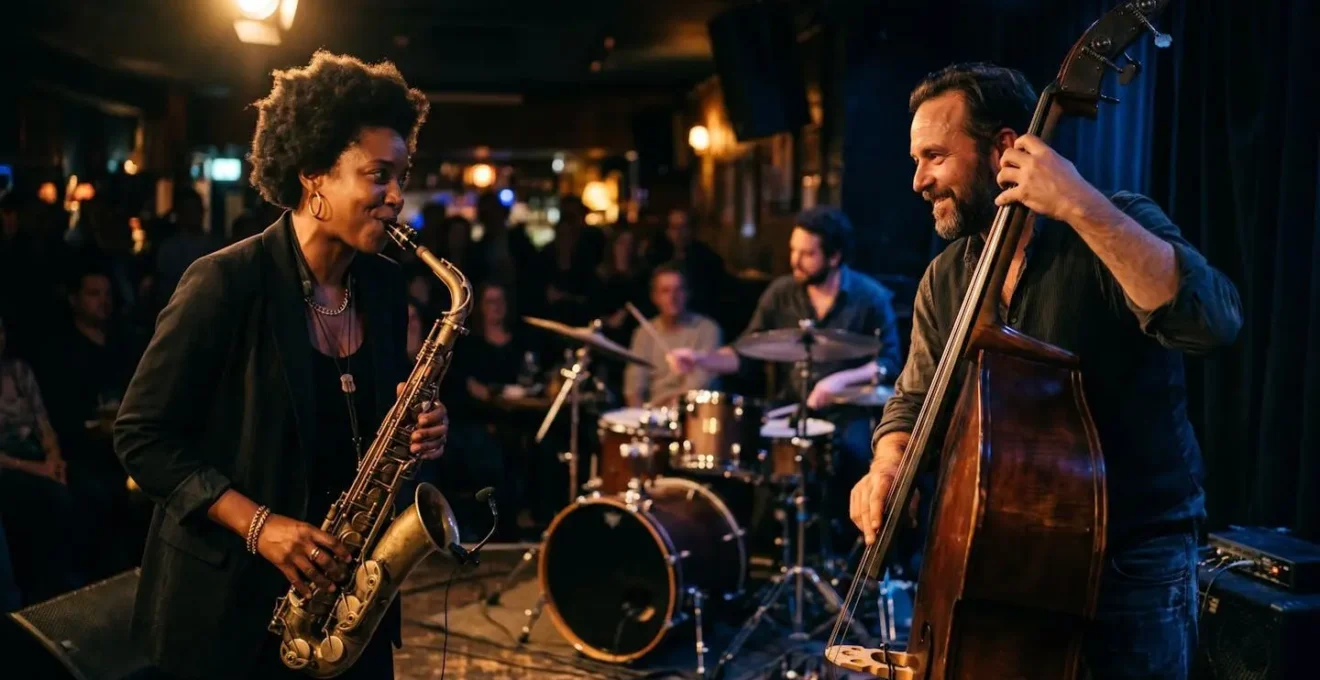
Surviving a jam session isn’t about playing the hottest licks; it’s about proving you understand the social contract of the stage.
- Your primary job is to make the band sound good, not to showcase your skills.
- The real audition is how you behave—musically and socially—when you’re not soloing.
Recommendation: Master these rules, and you’ll transition from a guest player to a trusted member of the scene.
Alright, listen up. You’ve been practicing in your room for months, you’ve got your licks down, and you feel ready. You walk into a club, see a jam session in full swing, and think, « I can do that. » And you probably can. But playing the right notes is only half the battle. As a jam session host, I see talented players come and go. The ones who stick around, the ones who get invited to join bands, aren’t always the flashiest. They’re the ones who understand the unwritten rules.
People will tell you to « listen » or « don’t play too loud. » That’s beginner advice. We’re going beyond that. We’re talking about the subtle art of the musical conversation, the economic reality of the venue, and the non-verbal cues that separate the amateurs from the pros. You think your audition happens when you’re taking a solo? You’re wrong. Your audition is happening from the moment you walk in the door.
Forget everything you think you know about showing off. This is not a talent show. A jam session is a fragile social and musical ecosystem. This guide will give you the roadmap to navigate it, not just to survive your first night, but to become a welcome and respected part of the scene. Let’s get started.
This guide breaks down the essential, unwritten rules you need to know. From the tunes you must learn to the cues you must watch, we’ll cover the real-world etiquette that separates the guests from the regulars.
Summary: A Jam Host’s Guide to Thriving in the Jam Session Ecosystem
- The Real Book: Why You Can’t Jam If You Don’t Know the Song
- Don’t Hog the Spotlight: Reading the Room on Solo Duration
- The Pentatonic Safety Net: Surviving a Song You Don’t Know Well
- The Conversation: Interacting with the Drummer
- Buy a Drink: Why the Real Audition Happens at the Bar
- Head-Solo-Head: Decoding the Roadmap of a Jazz Standard
- Eye Contact: How to Know When the Solo Ends
- Joining a Band: How to Survive Your First Rehearsal
The Real Book: Why You Can’t Jam If You Don’t Know the Song
Let’s get the most important rule out of the way first: you cannot participate if you do not know the music. A jam session is built on a shared repertoire, the « standards. » Showing up and expecting the band to play your obscure original or to teach you the chords on the fly is the ultimate sign of disrespect. The lingua franca of most jazz jams comes from a collection of lead sheets affectionately known as the Real Book. It’s not just a book; it’s a foundation.
Your responsibility is to do the homework *before* you ever put your name on the list. Listen to the tunes, learn the melodies, understand the forms. You don’t have to be a virtuoso, but you must be competent. As the experts at The Jazz Workshop point out when discussing its history, the Real Book is a unifying force. It’s what allows strangers to make coherent, beautiful music together on the spot. A recent analysis confirms that The Real Book has made this experience possible for generations of musicians. Showing up unprepared is like trying to have a conversation without knowing the language.
Don’t be that person. Your first step to becoming a jam session regular is building your own internal Real Book. Start with the most common standards— »Autumn Leaves, » « Blue Bossa, » « So What »—and expand from there. When you demonstrate that you’ve done the work, you earn the right to be on stage.
Your Action Plan: Learning Unfamiliar Tunes
- Listen actively: When you’re at the jam, find out the names of the tunes you don’t know.
- Document your gaps: Write the names and common keys of those tunes down.
- Hit the woodshed: Find the sheet music and recordings. Practice the melody, chords, and form in various keys and tempos.
- Transcribe and internalize: Analyze recordings for useful improvisational ideas and learn the lyrics if they exist to understand the song’s story.
- Return and conquer: Go back to the same jam session the next week and confidently request one of the tunes you’ve just mastered.
Don’t Hog the Spotlight: Reading the Room on Solo Duration
So, you know the tune. Great. The bandleader calls your name, you step up, and it’s your turn to solo. This is your moment to shine, right? Wrong. This is your moment to contribute. The single biggest mistake I see from new players is the endless solo. They get lost in their own world, shredding through chorus after chorus, completely oblivious to the bored rhythm section and the increasingly agitated host.
A solo is part of a musical conversation, not a monologue. The default length is often one or two choruses of the song’s form. If you’re playing a 12-bar blues, two choruses is 24 bars. That’s it. Taking eight choruses doesn’t make you sound eight times better; it makes you sound eight times more arrogant. Pay attention to the context. If it’s a packed night with a long list of players, keep it concise. Show that you can make a powerful musical statement in a short amount of time. That’s a far more impressive skill.
Your bandmates will give you cues. The drummer might play a more definitive fill, the pianist might comp more sparsely, or someone might just stare at you. Learn to recognize these signals. Your ability to gracefully end your solo is just as important as your ability to start it. It shows you’re listening and that you respect everyone else’s time on the bandstand.
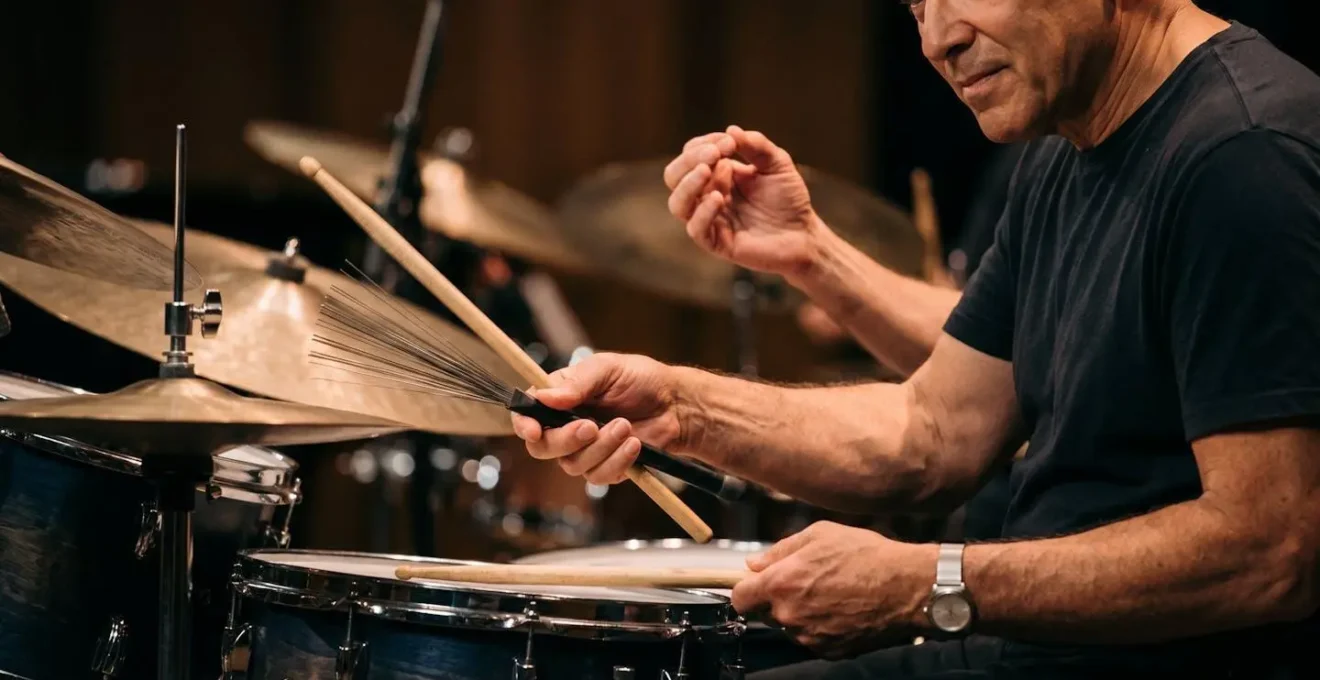
This image perfectly captures the subtlety of jam session communication. A simple, almost imperceptible gesture is often all the warning you’ll get that your time is up. If you’re not watching, you’re not listening. And if you’re not listening, you don’t belong on the stage. It’s that simple.
The Pentatonic Safety Net: Surviving a Song You Don’t Know Well
Ideally, you know every tune called. Realistically, that’s not always going to happen. Sooner or a later, you’ll be on stage when the bandleader calls a song you’ve never heard. Your heart rate skyrockets. Do you panic and walk off? No. This is where you deploy your « damage control » strategy: the pentatonic scale.
The pentatonic scale is your musical safety net. It’s a five-note scale (as the name implies) that, in most blues, rock, and many jazz contexts, sounds good over a wide variety of chords without clashing horribly. It won’t win you a Grammy for harmonic sophistication, but it will keep you from derailing the entire performance. Your job in this scenario is not to be a hero; it’s to survive and, more importantly, to not ruin the song for everyone else. Play simply, focus on rhythm and phrasing, and listen intently to the chords happening underneath you.
Think of it as musical first aid. Use the minor pentatonic scale for blues and minor-key tunes, and the major pentatonic for major-key songs. Find the root, lock into the groove, and play simple, melodic phrases. This isn’t the time to try out your fancy bebop lines. It’s the time to show you can be a team player, even when you’re out of your comfort zone.
Case Study: Dexter Gordon’s Pentatonic Approach on « Watermelon Man »
If you think the pentatonic scale is just for beginners, think again. A classic example from Herbie Hancock’s 1962 album ‘Takin’ Off’ proves its power. An 8-bar excerpt from Dexter Gordon’s solo on « Watermelon Man » shows how an entire solo section can be masterfully built using only the F minor pentatonic scale. This demonstrates that sophisticated, compelling improvisation can be achieved with simple tools when executed with strong rhythmic and melodic intent.
The Conversation: Interacting with the Drummer
The most important person you need to connect with on stage isn’t the audience or the bandleader; it’s the rhythm section, especially the drummer. The drummer and bassist are the engine of the band. If you’re not locked in with them, you’re just floating in space. This connection goes beyond just playing in time; it’s a dynamic, interactive musical conversation.
Listen to how the drummer is accenting the beat. Are they playing busy or sparsely? Loud or soft? Your phrasing should react to theirs. If the drummer builds tension, you can either build with them or create contrast by playing more simply. This call-and-response is the essence of jazz and blues improvisation. A classic format for this is « trading fours, » where a soloist and the drummer exchange four-bar phrases. This isn’t a competition; it’s a dialogue.
It’s about listening, responding, and adding something meaningful to the musical conversation.
– Von Baron, How To Trade Fours In Jazz Drumming Made Easy
The goal is to create a cohesive whole. Make eye contact. Acknowledge a cool fill they played. When you show the rhythm section that you’re listening to them, they will give you everything they’ve got, making you sound a thousand times better. Ignore them, and they’ll give you a flat, lifeless beat—and you’ll deserve it.
Technique Analysis: The Art of Trading Fours
To truly understand this conversation, consider the concept in practice. A detailed breakdown of trading fours on a rearranged standard demonstrates how a drummer responds to a pianist’s phrasing. Instead of simply copying the rhythms, the drummer listens for the vibe, dynamics, and rhythmic spacing. They then echo that feeling, continuing the « story » of the solo. This shows that interaction is about maintaining continuity and shared feeling, not just mimicry.
Buy a Drink: Why the Real Audition Happens at the Bar
You’ve played your two choruses, you’ve connected with the drummer, and you’ve gracefully exited the stage. Now what? You pack up your instrument and go home? Absolutely not. Now, the most important part of your night begins: you go to the bar, you order a drink (even if it’s just a soda), and you tip the bartender well. This is non-negotiable.
Remember the ecosystem? The venue owner is not running a charity for musicians. They’re running a business. The jam session only exists if the bar is making money. If a hundred musicians show up, drink free tap water, and leave, the owner loses money. After a few weeks of that, guess what happens to the jam session? It disappears. By buying a drink, you are paying your dues and ensuring that this valuable community resource continues to exist. It shows you understand the big picture.
Furthermore, the time between sets is your real networking opportunity. This is where you talk to the other musicians, compliment someone on their solo, and introduce yourself to the host. This is where relationships are built and where you move from « that person on the list » to a known and respected member of the scene. Your playing gets you noticed, but your attitude and support for the venue get you invited back. Don’t underestimate the power of your social currency.

Case Study: Respecting the Venue Ecosystem
The financial reality of jam sessions is often invisible to participants. In a frank discussion, a musician shared how a beloved weekly jam was constantly at risk of being discontinued due to low revenue. By actively encouraging all attending musicians to order from the bar or menu and tip generously, the players themselves saved the event. This approach shows that the « audition » isn’t just about musical skill; it’s about actively contributing to the health of the entire ecosystem. As the musician’s experience in San Diego demonstrates, supporting the venue is a direct investment in your own musical future.
Head-Solo-Head: Decoding the Roadmap of a Jazz Standard
Now that you understand the micro-rules of interaction, let’s zoom out to the macro-structure. Every song has a roadmap, and if you don’t know it, you’re guaranteed to cause a pile-up. The vast majority of standards played at a jam session follow a simple, predictable structure: Head-Solo-Head.
The « Head » is the main melody of the song. At the beginning of the tune, the band will typically play the head once or twice. This establishes the song for the audience and makes sure everyone is on the same page. Then comes the « Solo » section. One by one, different members of the band will improvise over the song’s chord progression, or « changes. » After everyone has had a chance to solo (or the bandleader decides it’s time to move on), the band returns to the « Head » one last time to close out the tune.
This structure is the default because, as noted by the experts at Jazz Night School, it’s efficient and reliable. At a jam, there’s no time for rehearsals or detailed arrangements. As they put it, « The music is played unrehearsed and without much discussion. » The Head-Solo-Head format provides a common framework that everyone knows and can follow without a word. Your job is to know where you are on that roadmap at all times. Listen for the cues that signal the end of the solo section and the return to the final head. It’s the most basic rule of the road.
- Head: The song begins with the main melody, often played twice.
- Solos: Each soloist takes one or more choruses to improvise over the form.
- Head: The band returns to the main melody to signal the end is near.
- Outro: The song concludes, sometimes with a specific ending (coda) or a simple fade-out. Watch for signals!
Eye Contact: How to Know When the Solo Ends
The Head-Solo-Head structure is the map, but how do you know when it’s your turn to drive? How do you know when the person soloing is finished? You watch and you listen for a complex hierarchy of cues. Shouting « you’re done! » isn’t an option. Communication on the bandstand is a subtle, non-verbal language.
The most obvious cue is musical. A soloist nearing the end of their statement will often start playing phrases that are simpler, less complex, or they might even quote the main melody of the tune. This is like a speaker saying, « in conclusion… » It’s a clear sign they are wrapping up. If you hear the melody, get ready, because the final head is probably coming up next.
The next level of communication is body language. Often, a soloist will physically turn towards the next person in line to solo, or back towards the bandleader, as they play their final phrase. This is a direct hand-off. The most explicit cue, of course, is direct eye contact. A nod, a glance, a raised eyebrow—these are the sentences of the on-stage conversation. If you’re staring at your shoes or have your eyes closed in a fit of musical ecstasy, you’re missing the entire dialogue.
As violinist Christian Howes advises, it’s a combination of all these factors. To create a satisfying experience, musicians must prioritize communication. Clear signals—whether musical, visual, or otherwise—are what hold the performance together.
Hierarchy of Ending Cues: What to Look and Listen For
- Musical Cues: The most reliable sign. Listen for the soloist to start quoting the main melody or to decrease the complexity and volume of their phrases.
- Body Language: A strong indicator. Watch for the soloist to physically turn their body toward the next player or the bandleader.
- Eye Contact: The most direct, personal cue. A nod or a direct look from the soloist is an explicit hand-off.
- Clear Communication: Ultimately, as Christian Howes emphasizes, it’s about using all available channels. As he states, » whether through spoken word, eye contact, or musical cues, clear communication helps create a more satisfying jam. »
Key Takeaways
- Master the standards: Knowing the shared repertoire is non-negotiable. Do your homework.
- Be a conversationalist, not a monologist: Listen more than you play, keep solos concise, and interact with the rhythm section.
- Support the ecosystem: The jam session depends on the venue’s success. Buy a drink, tip the staff, and be a positive presence.
Joining a Band: How to Survive Your First Rehearsal
So, you’ve followed the rules. You’ve been showing up, you know the tunes, you keep your solos tasteful, you buy a drink, and you’re a good hang. People are starting to recognize you. The bandleader knows you by name. This is the payoff. A jam session, at its core, is a social and professional filter. It’s where bandleaders come to scout new talent. Following the etiquette isn’t just about being polite; it’s about being professional. It’s how you turn a casual jam into a real gig.
The jam session is the laboratory for jazz improvisation. It provides the proper environment for spontaneous experimentation of the vast playlist of jazz repertoire, song forms, substitute chord progressions, altered chords, harmony, melody, traditional and advanced improvisational concepts.
– Derrick Gardner, Jam Session Etiquette
This « laboratory » is where you prove your worth. Surviving your « first rehearsal » happens every time you step on stage at a jam. You’re demonstrating that you’re reliable, you have good ears, and you can play well with others. These are the exact same skills required to be in a successful band. The jam session is, as many professional players will tell you, essential for networking. It’s a live-action resume. When you treat every jam session with the professionalism of a paid gig, people will notice.
The transition from jamming to joining a band is the natural outcome of consistently applying these principles. It’s the reward for your discipline and respect for the music and the community. You’ve proven you’re not just a player; you’re a musician.
You now have the roadmap. You understand that your musical ability is just one part of the equation. By respecting the music, the musicians, and the venue, you’re not just playing notes; you’re building a reputation. Now go out there, be a pro, and earn your spot on that stage.