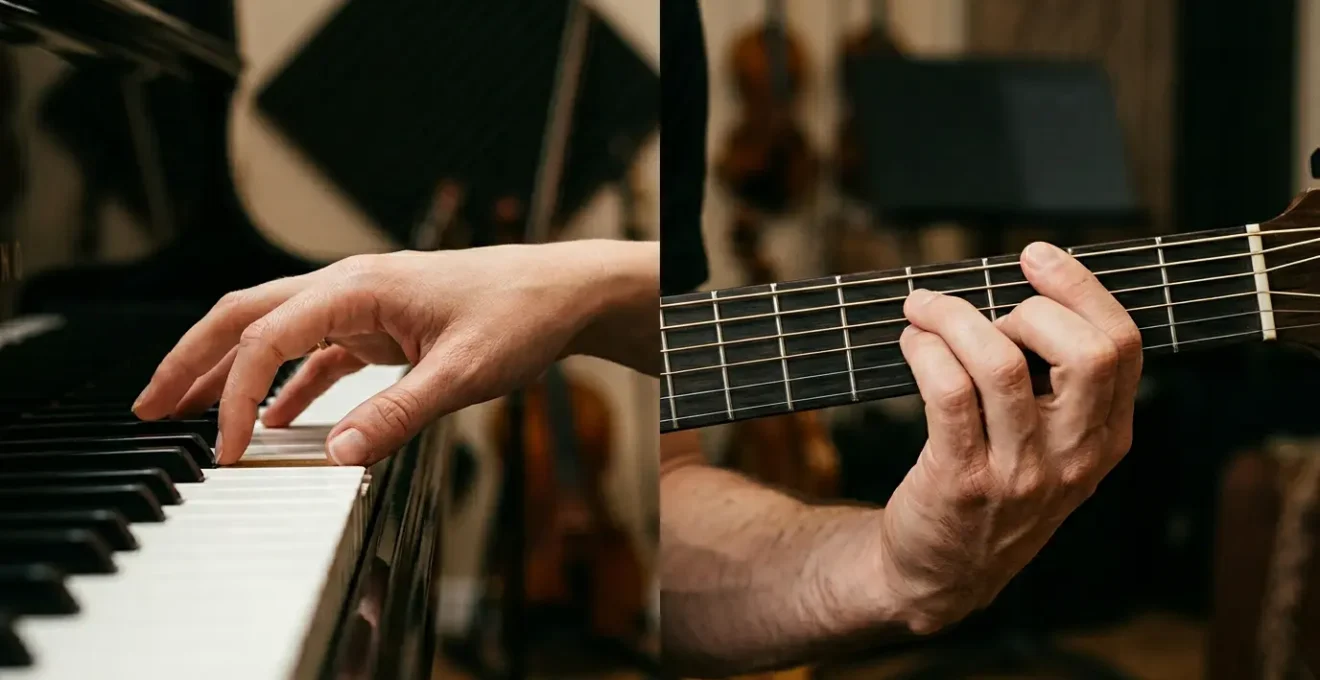
Playing an instrument is not just a hobby; it is a powerful neurological program for developing superior fine motor skills that translate directly to everyday life.
- It trains each hand to perform independent, complex tasks, strengthening the connection between the brain’s hemispheres.
- It builds an internal « map » of the fingers in space (proprioception), enhancing precision for tasks from typing on a keyboard to buttoning a shirt.
Recommendation: Start with simple rhythmic activities to build a foundational motor-sensory connection, which is the true beginning of advanced dexterity, regardless of age.
As a hand therapist and musician, I often see the subtle frustrations of poor fine motor control. It’s the child struggling with shoelaces, the adult fumbling with keys, or the teen whose handwriting is a barely legible scrawl. The common advice is often a vague « practice more, » but this misses the core of the issue. Dexterity isn’t just about repetition; it’s about targeted, high-feedback training that builds sophisticated neural pathways. Many parents and adults wonder if music lessons are a worthwhile investment beyond the artistic benefits. They see musicians’ hands fly across keys or frets and intuit there’s something more happening.
They are absolutely right. The structured, progressive demands of learning an instrument like the piano or guitar are, from a therapeutic standpoint, one of the most effective fine motor skill development programs available. It goes far beyond strengthening fingers. It fundamentally reorganizes how the brain perceives and controls the hands. Instead of simply asking *if* playing an instrument helps, the more powerful question is *how* it systematically deconstructs and rebuilds manual dexterity for life.
This article will unpack the specific anatomical and neurological mechanisms at play. We will explore how confronting the inherent weakness of the fourth finger builds isolated strength, why coordinating two hands is a full-brain workout, and how this training translates into tangible, real-world skills like faster typing and a more controlled pencil grasp. We will move from the foundational role of rhythm to the advanced proprioceptive skills that allow musicians to play without looking, revealing how music lessons build a blueprint for dexterity that lasts a lifetime.
This guide breaks down the specific ways musical practice enhances manual dexterity. From the neurological benefits of bilateral coordination to the direct impact on everyday tasks, you will discover the science behind this powerful connection.
Summary: Unlocking Dexterity: How Piano and Guitar Reprogram Your Hands for Lifelong Skill
- The Fourth Finger Challenge: Strengthening the Weakest Link
- Two Hands, Two Jobs: Why Piano is the Ultimate Brain Gym
- Playing Without Looking: Knowing Where Your Fingers Are in Space
- Does Piano Practice Make You a Faster Typist?
- Grip Strength and Control: The Link Between Bow Hold and Pencil Grasp
- Stiff Fingers: Stretching Exercises for Older Beginners
- Holding the Shaker: Developing Fine Motor Pincer Grasp
- Why Simple Rhythmic Activities Are Vital for Early Motor Development?
The Fourth Finger Challenge: Strengthening the Weakest Link
Every aspiring pianist or guitarist quickly discovers a frustrating truth: the ring finger is the weakest, most stubborn digit. It seems to have a mind of its own, refusing to move without its neighbors tagging along. This isn’t a personal failing; it’s an anatomical feature. The extensor tendons that lift the ring and middle fingers are interconnected by fibrous bands. This means isolating the ring finger is a significant biomechanical challenge. From a therapeutic perspective, this « bug » is actually a feature of instrumental learning. Forcing the ring finger to work independently is a masterclass in developing isolated motor control.
To overcome this, musicians perform exercises that specifically target this digit, gradually teaching the brain to send more precise neural signals. According to research from the Journal of Neurophysiology, this mechanical coupling indeed limits the independence of the ring finger more than any other. A 2025 study further clarified this, finding that while neural factors are the main constraint during isometric force exertions (like pressing a key down), mechanical factors become the larger hurdle during actual movement (lifting and lowering the finger). The involuntary force exerted by neighboring fingers can be as high as 7.3-16.5% of maximum voluntary contraction when trying to move the ring finger alone.
By persistently practicing scales and chords, a musician is essentially running a high-repetition therapy program. This training not only strengthens the muscles controlling the finger but, more importantly, enhances the brain’s « motor map. » The brain learns to inhibit the signals telling the adjacent fingers to move, leading to greater dexterity. This newfound control isn’t confined to the instrument; it translates to any task requiring fine, individuated finger movements, from surgery to typing complex passwords.
Two Hands, Two Jobs: Why Piano is the Ultimate Brain Gym
One of the most powerful neurological benefits of playing the piano comes from a task that seems simple at first glance: using both hands to do different things simultaneously. This is known as bilateral coordination. While one hand plays a melody, the other provides a rhythmic chordal accompaniment. This is profoundly more complex for the brain than symmetrical tasks like clapping or lifting an object with two hands. Each hand is managed by the opposite brain hemisphere, and to perform two different jobs, these hemispheres must communicate at an incredibly high speed and with immense precision through the corpus callosum—the neural bridge connecting them.
This constant cross-talk acts like a workout for the brain, strengthening pathways and improving overall processing efficiency. Think of it as upgrading the brain’s internal internet connection from dial-up to fiber optic. For a parent considering instruments, the piano is often considered the best for this specific skill due to its linear layout and the clear division of labor between the hands (melody in the right, harmony in the left, typically). However, advanced guitar (fingerstyle), drums, and the organ demand similar levels of hemispheric independence.
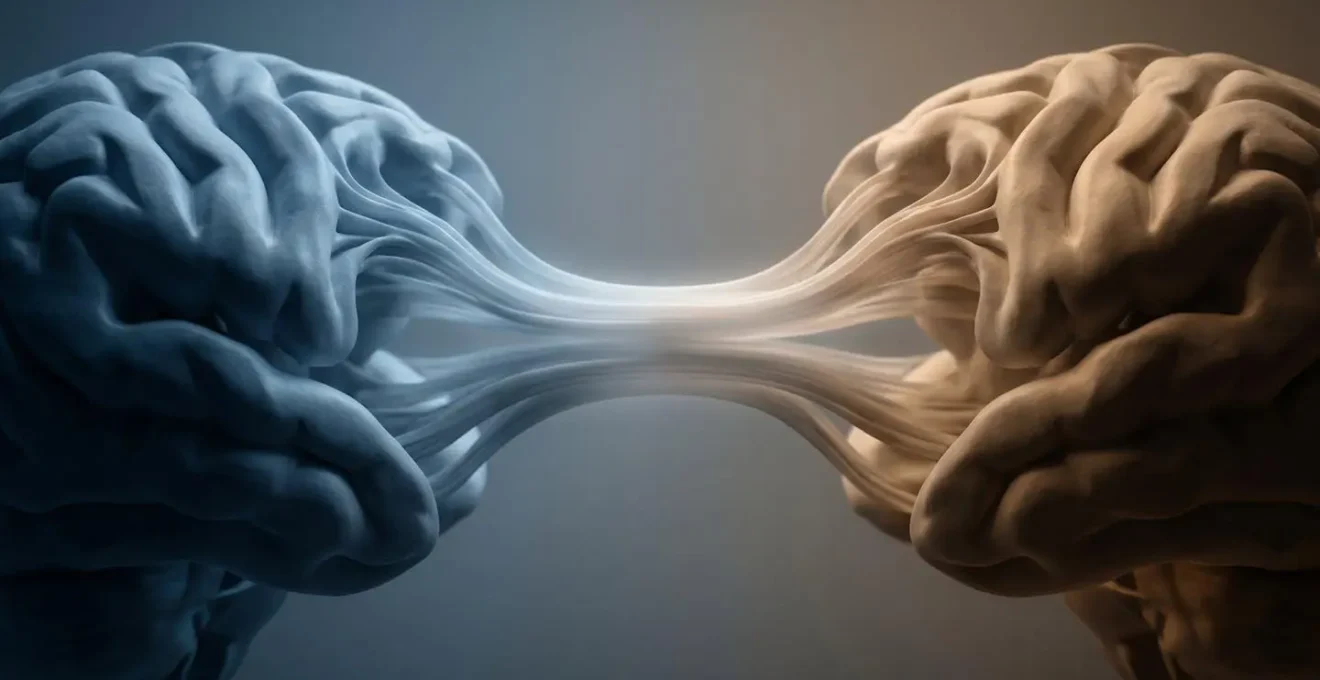
The implications of this enhanced brain connectivity are vast. Children who develop strong bilateral coordination through music often show improvements in other areas requiring the use of both sides of the body, such as sports (dribbling a basketball while running), tying shoes, or cutting with scissors. For adults, this neural flexibility can help maintain cognitive function and motor skills. The act of forcing the left and right brain to cooperate on a complex, real-time task like playing music builds a resilient and adaptable cognitive architecture.
Playing Without Looking: Knowing Where Your Fingers Are in Space
Watch an experienced musician, and you’ll notice something remarkable: they often aren’t looking at their hands. They can navigate complex chord changes or leap across the keyboard with confidence, their eyes focused on the sheet music or closed in concentration. This seemingly magical ability is a highly developed sense of proprioception—the body’s internal awareness of its position in space. It’s the same sense that allows you to touch your nose with your eyes closed or walk through a dark room without bumping into furniture. Musical training hones this sense to an extraordinary degree.
When a pianist practices a scale, they aren’t just memorizing a sequence of movements; they are building a detailed « motor map » in their brain. Each finger’s position relative to the others and to the keys becomes second nature. This internal representation is built through a combination of tactile feedback (the feel of the keys), auditory feedback (the sound produced), and motor memory. The brain learns to predict the outcome of a movement without needing constant visual confirmation. This frees up cognitive resources, allowing the musician to focus on expression, timing, and dynamics rather than the mechanics of hitting the right notes.
This enhanced proprioception is a highly transferable skill. A 2025 study published in the journal *Cortex* highlighted this by having musicians and non-musicians march in place while blindfolded. The musicians, with 6-28 years of experience, showed a significantly superior ability to maintain their position and orientation, demonstrating a more accurate internal body map. This improved spatial awareness translates directly to tasks like typing, where you don’t look at your fingers, or any activity that requires precise hand movements in a three-dimensional space, from assembling small parts to performing delicate craftwork.
Does Piano Practice Make You a Faster Typist?
The connection between piano playing and typing speed is not just anecdotal; it’s a direct result of transferable motor skills. The rapid, independent, and precise finger movements required for playing the piano are functionally very similar to the demands of touch typing. Both activities rely on procedural memory, finger dexterity, and a highly developed sense of proprioception to strike targets accurately without visual guidance. The brain pathways built for one task can be effectively co-opted for the other.
The evidence for this transfer is compelling. A study from the Max Planck Institute for Informatics found that professional pianists, even on their first attempt with a novel piano-to-text system, could type with remarkable speed. Their performance demonstrated that professional pianists can type at over 80 words per minute, a rate that matches that of experienced professional QWERTY typists. This suggests that the underlying motor programs for finger speed and accuracy are already in place, and only the « mapping » to letters needs to be learned.
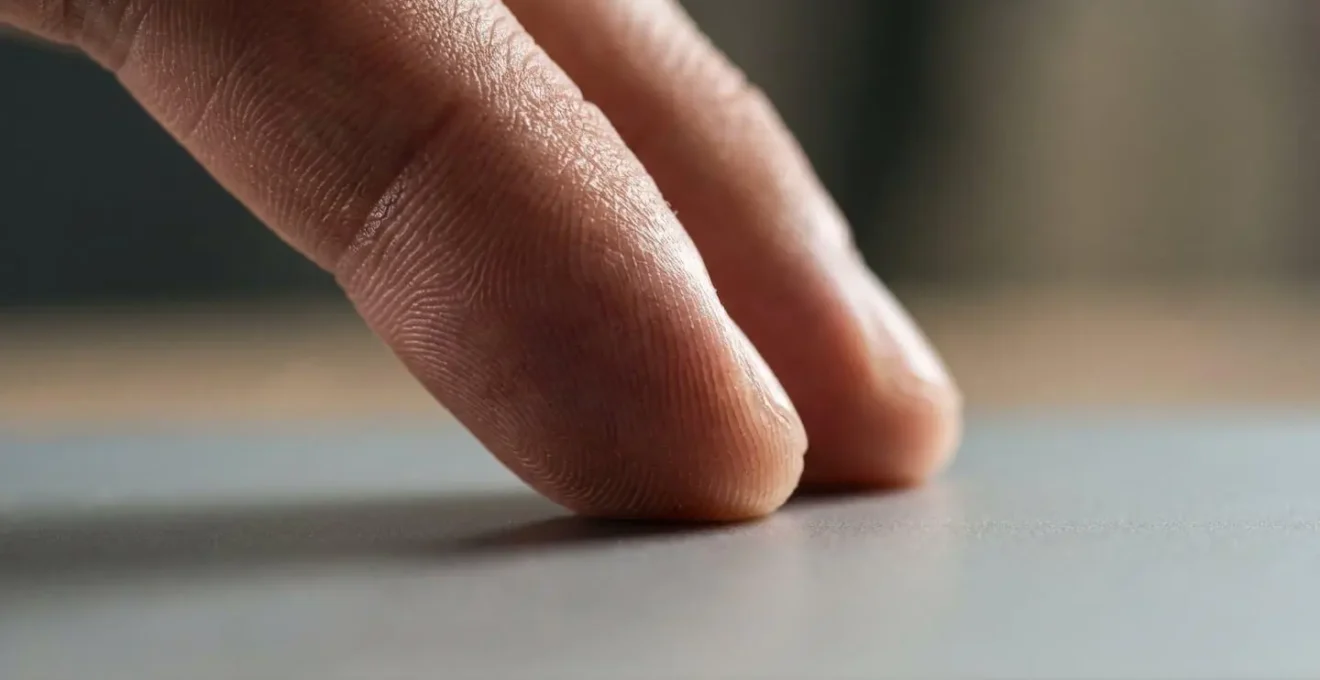
Furthermore, a 2013 study in *BMC Neuroscience* explored how this speed develops. Musically naïve participants who practiced piano for just four days showed a significant increase in the maximum speed of their finger movements, and these effects were still present two months later. Crucially, the study confirmed « intra-manual transfer, » meaning that practicing specific sequences made the fingers faster even when playing *unpracticed* sequences. This proves that piano practice doesn’t just teach you songs; it fundamentally upgrades the speed and efficiency of your fingers’ motor control, a benefit that directly applies to the modern necessity of typing.
Grip Strength and Control: The Link Between Bow Hold and Pencil Grasp
While instruments like the piano focus on individuated finger strikes, others like the violin, cello, and even the guitar (in holding a pick) are masterclasses in grip control. The way a violinist holds a bow or a guitarist holds a pick is not about raw strength, but about a dynamic, nuanced application of force. It requires a sophisticated balance between stability and flexibility, a skill that has a direct parallel in holding a pencil or a paintbrush. This is where we see the development of force sense acuity—the ability to precisely modulate the amount of pressure applied by the fingers.
This skill is foundational for legible handwriting. Many children who struggle with writing press down too hard, leading to hand fatigue and messy letters, or too lightly, resulting in faint, uncontrolled lines. Learning to hold a bow or pick teaches the hand to find that « just right » amount of pressure. It trains the small intrinsic muscles of the hand to work in concert, developing a grip that is both firm and responsive. Indeed, research on music and motor development shows that younger children who engage in music activities tend to have better fine motor skills than their non-musical peers.
This extends beyond grip to tactile sensitivity. As explained in research on the topic, the fingertips become more attuned to subtle differences in pressure and texture. As researchers Hosoda & Furuya noted in a study for the *Journal of Neurophysiology*:
Professional pianists have a higher force sense acuity and lower two-point tactile discrimination thresholds at the fingertips, which translates to an improved force control during keystrokes compared to non-musicians.
– Hosoda & Furuya, Journal of Neurophysiology research on tactile discrimination in musicians
This heightened sensitivity and force control, whether developed through pressing keys or holding a bow, is a universal asset. It’s the difference between a clumsy grip and a dexterous, controlled touch in any manual task.
Stiff Fingers: Stretching Exercises for Older Beginners
A common concern for adults starting an instrument is stiffness in the hands and fingers. Years of typing, gripping, and other repetitive motions can lead to reduced mobility and a feeling of being « all thumbs. » The question often arises: is it too late to develop the dexterity needed for music? From a therapeutic standpoint, the answer is a resounding no. In fact, learning an instrument can be one of the best ways to combat age-related stiffness and maintain hand health, provided one approaches it correctly.
The key is to treat practice like any other physical activity: it requires a proper warm-up. Statically stretching cold tendons and muscles is often counterproductive and can even increase the risk of strain. Instead, the focus should be on dynamic mobility and activation. Gentle movements that take the joints and nerves through their full range of motion prepare the hands for the demands of playing. This is not about forcing flexibility but about waking up the neural pathways and increasing blood flow to the hands and forearms.
For older beginners, consistency over intensity is crucial. Short, regular practice sessions that incorporate dedicated warm-up and cool-down routines will yield far better results than infrequent, marathon sessions. The goal is to gradually increase the brain’s fine motor control and the tissues’ pliability. This process of re-engaging with the hands’ potential can reverse some of the stiffness and provide a renewed sense of dexterity that benefits all daily activities.
Your Evidence-Based Warm-Up Plan for Musicians
- Dynamic Mobility Activation: Perform gentle pre-practice nerve gliding exercises to activate neural pathways and improve joint mobility rather than static stretching.
- Progressive Finger Independence Drills: Practice curling palms, stabilizing wrists, and using your thumb with other fingers in pincer activities away from the instrument.
- Bilateral Coordination Exercises: Tap whole notes in one hand while tapping a quarter-note pulse in the other, then switch tasks between hands to develop hand independence.
- Gross-to-Fine Motor Transition: Start with larger gross motor rhythmic movements (like tapping your foot) before transitioning concepts into fine motor finger skills at the instrument.
- Posture-First Approach: Begin with neck and shoulder roll exercises, as tension in these areas directly impacts hand stiffness and dexterity.
Holding the Shaker: Developing Fine Motor Pincer Grasp
For the youngest learners, the journey to fine motor mastery doesn’t begin with a piano or a violin. It starts with something much simpler: a shaker, a set of bells, or a small hand drum. These simple percussion instruments are developmental powerhouses, particularly for training one of the most crucial hand skills: the pincer grasp. This is the precise coordination of the thumb and index finger used to pick up and manipulate small objects, a cornerstone of human dexterity essential for buttoning, zippering, and eventually, writing.
When a toddler holds a shaker, they are engaging in a multi-sensory feedback loop. They grip the object (tactile), shake it to produce a sound (auditory), and see their own hand causing the action (visual). This integrated experience helps the brain map the relationship between intention, movement, and outcome. As developmental research indicates that even babies who can firmly grasp a rattle can benefit from playing simple shakers, with these activities helping to strengthen the foundational pincer grasp.
While simply holding an instrument is beneficial, a comparative study highlighted the accelerated benefits of formal training. When comparing a group of children who received piano lessons to a group with no music training over two years, the piano group showed significantly greater improvement in fine motor skills and a faster speed of response. The neural connections formed by learning to play music simultaneously—linking specific finger movements to specific sounds in a structured way—supercharge the developmental process. The humble shaker is the gateway, but structured learning is the accelerator.
Key Takeaways
- Finger Independence: Playing instruments forces the brain to overcome the natural mechanical limitations of the hand, particularly the weak ring finger, building isolated motor control.
- Brain Connectivity: Coordinating two hands for different tasks (bilateral coordination) strengthens the corpus callosum, improving communication between brain hemispheres for all activities.
- Proprioception and Transfer: Musical practice builds a detailed internal « map » of the hands, which is directly transferable to tasks like typing, improving both speed and accuracy without visual reliance.
Why Simple Rhythmic Activities Are Vital for Early Motor Development?
Before a child can master the fine motor skills of pressing a specific key or fretting a string, they must first develop a more fundamental sense of rhythm and movement. This is not just about keeping a beat; it’s about engaging the entire body in a way that organizes the brain. Simple activities like dancing, clapping, marching, and rocking are crucial for stimulating the vestibular system, the sensory system located in the inner ear that controls balance, spatial orientation, and movement.
A well-developed vestibular system is the bedrock upon which more complex motor skills are built. As research from the National Institutes of Health highlights, this system supports everything from emotional regulation and motor planning to early literacy skills. When a child moves rhythmically, their brain is learning to process sensory input, coordinate large muscle groups, and understand its own position in space. This gross motor proficiency creates the stable physical and neurological platform necessary for the subsequent development of fine motor control in the hands and fingers.
This connection between early movement and later achievement is profound. It lays the groundwork for spatial reasoning, a key component of creative and intellectual success. A landmark longitudinal study from Vanderbilt University provides striking evidence for this:
Exceptional spatial ability at age 13 predicts creative and scholarly achievements more than 30 years later, with early experiences in music and movement showing a connection to creative and scholarly achievements.
– Vanderbilt University Longitudinal Study, Psychological Science journal, Association for Psychological Science
Therefore, encouraging a child to engage in simple, joyful rhythmic play is the first and most important step. It’s the foundational training that prepares the brain and body for the focused dexterity that instrumental music will later refine.
The journey to lifelong dexterity begins not with a formal lesson, but with the simple joy of rhythmic expression. The first step for any parent or aspiring adult learner is to embrace movement and sound. Start today by incorporating simple musical play into your routine to build the neurological foundation for advanced skill.