Artists & inspirations
Music is far more than the simple execution of notes on a page; it is an ongoing dialogue between raw inspiration, technical discipline, and emotional expression. Whether you are a bedroom producer manipulating everyday noises or a classical conductor leading an eighty-piece orchestra, the creative journey requires a deep understanding of both the art and the craft. Finding your voice means exploring the boundaries of traditional instruments, embracing modern technology, and understanding the complex ecosystem that brings a song from a fleeting thought to a finished record.
For many musicians, the path from novice to master can feel overwhelming. The landscape is vast, covering everything from the intricate acoustics of recording techniques to the psychological nuances of live performance and studio dynamics. By breaking down the creative process into manageable disciplines—composition, arrangement, production, performance, and career strategy—artists can build a sustainable workflow. This foundational overview explores the essential pillars of musical artistry, offering insights that bridge the gap between abstract inspiration and professional execution.
The Spark of Creation: Sound Design and Composition
Every piece of music begins with a spark, but waiting for inspiration to strike is rarely a sustainable strategy. Modern creators actively hunt for unique sounds and utilize structured methods to overcome the intimidation of the blank page. Today, the world itself is an instrument waiting to be played.
Finding Inspiration in the Everyday
The advent of accessible digital audio workstations (DAWs) has revolutionized how we source inspiration. Instead of relying solely on synthesizers, producers frequently use field recordings and everyday objects to build unique sonic identities. For instance, manipulating a simple wine glass ping using granular synthesis can stretch a micro-second of audio into a lush, evolving ambient pad. Similarly, creating glitch beats by sequencing door slams or heavy metallic impacts adds an organic, aggressive texture that synthesized drums often lack.
When capturing these real-world sounds, technique is paramount. Recording elements like heavy rain without destroying delicate studio microphones requires careful placement and weatherproofing, ensuring you capture the rich texture rather than distorted noise. However, artists must also navigate the legal landscape; capturing a signature street sound—like a public transit announcement—can sometimes trigger copyright issues, making it essential to understand fair use and public domain regulations in your region.
Overcoming the Blank Page
For traditional and modern composers alike, starting a new piece is often the hardest hurdle. Utilizing compositional games—such as restricting yourself to three notes or writing a melody based on a visual prompt—can bypass overthinking. When crafting character themes for visual media, the goal is to tell a complex story without words, using specific intervals and instrumentation to evoke specific traits.
- Establish a Core Motif: Start with a short, memorable rhythmic or melodic phrase.
- Develop through Variation: Alter the harmony, tempo, or instrumentation rather than writing entirely new sections.
- Navigate Expectations: When scoring for film, composers often face the temp track curse, where directors fall in love with placeholder music. The key is to analyze the emotional function of the temp track rather than copying its notes.
Crafting the Song: Songwriting and Arrangement
Once the initial idea is formed, it must be sculpted into a cohesive piece. Songwriting and arranging are the architectural stages of music, dictating how a listener will move through the emotional journey of the track.
Melodies, Lyrics, and Emotional Connection
Crafting a song that lingers in the listener’s mind—an earworm—relies heavily on the balance of simplicity and repetition. Chorus melodies should ideally mirror natural speech patterns, ensuring that the stressed syllables of the lyrics fall logically on the strong beats of the measure. This makes the vocal delivery feel effortless and conversational.
Great lyricists abide by the rule of showing rather than telling. Using vivid sensory details to evoke emotion is far more effective than stating a feeling outright. Furthermore, moving beyond basic AABB rhyme schemes and incorporating internal rhymes creates a sophisticated, driving flow that propels the listener forward.
The Arranger’s Art
Arrangement is the process of deciding who plays what, and when. It requires a deep understanding of the frequency spectrum and the physical limits of each instrument. A skilled arranger knows that creating clarity in the low end often means choosing strictly between a double bass or a cello, rather than having them muddy the same frequencies.
Effective voice leading is crucial. Traditional rules, such as avoiding parallel fifths, exist because smooth voice leading sounds naturally pleasing to the human ear and prevents individual voices from losing their independence. Arrangers also hold the power to completely shift a song’s genre. Adapting a pop rhythm section into a reggae style, or changing the mood entirely by placing a sad, simple melody over complex jazz chords, demonstrates the transformative power of harmonic context.
Behind the Glass: Production and Studio Dynamics
The recording studio is where raw performances are polished into permanent records. Here, the producer acts as the visionary, shaping the sonic identity of the artist while managing egos, budgets, and time constraints.
The Producer’s Vision and Mixing Strategy
A successful production often starts with song selection; industry professionals know that the potential of a hit is usually decided long before the recording light turns red. During the mixing phase, using commercial hits for sonic benchmarking helps guide the direction of the mix, ensuring the track holds up against current industry standards.
Creating a cohesive sound requires technical finesse. Mixing wet and dry samples appropriately places disparate elements into a unified acoustic space. Moreover, producers must balance the frequency spectrum, making critical decisions about whether a track needs to sound thin and intimate or thick and massive—such as using intense distortion and heavy reverb to make a small radiator sound like a cinematic boom.
Navigating Studio Psychology
The technical aspects of a studio are useless if the performer is tense. Getting the perfect vocal take is largely a matter of psychology: creating a comfortable, dimly lit, and supportive environment allows the singer to lower their guard. Producers must also be ruthless editors. Knowing when to mute a technically brilliant but emotionally distracting guitar solo is the essence of killing your darlings for the greater good of the song.
The Long Game: Mastering Your Instrument and Mindset
True artistry is built on a foundation of rigorous, intelligent practice. The ten-year journey to instrument mastery is rarely a steady upward curve; it is filled with plateaus and breakthroughs.
Smart Practice over Mindless Repetition
Many musicians hit a flatline where they feel their skills are actually degrading. This is a natural neurological phase preceding a major breakthrough. To navigate this, the quality of practice must supersede the quantity.
- Focused Micro-Sessions: Twenty minutes of hyper-focused, goal-oriented practice yields better muscle memory than two hours of mindless repetition while watching television.
- The Audio Diary: Recording your practice sessions creates an objective timeline. Listening to last year’s recordings provides undeniable proof of progress when motivation wanes.
- Cross-Training: Studying outside your primary genre—such as a metal guitarist practicing classical fingerstyle—forces the brain to adapt to new physical and harmonic challenges.
Stepping into the Spotlight: Live Performance and Gigging
Transitioning from the practice room to the stage introduces an entirely new set of challenges. Live performance is about connection, logistics, and managing human physiology under pressure.
Managing Stage Fright and Audience Connection
Adrenaline is inevitable, but how a performer manages it dictates the quality of the show. Relying on deep, controlled breathing techniques naturally slows the heart rate, providing a sustainable alternative to performance anxiety medications. Establishing a pre-show bubble of focus allows artists to step onto the stage fully present.
Once under the lights, scanning the crowd and making fleeting eye contact helps you look connected without being terrified. Crucially, musicians must develop a reliable poker face. The vast majority of the audience does not know the score; if you play a wrong note with absolute conviction, it becomes a jazz passing tone rather than a mistake.
The Local Scene and Jam Etiquette
Building a live career starts locally. Whether finding bandmates through online classifieds or scouting open mic nights, networking is essential. When participating in local jam sessions, etiquette is just as important as chops.
- Know the Repertoire: Showing up without knowing standard repertoire (like the foundational tunes in jazz) severely limits your ability to participate.
- Read the Room: Do not hog the spotlight. A brilliant, concise solo is always preferred over an endless display of technical exercises.
- The Safety Net: If called to play over an unfamiliar progression, the pentatonic scale provides a reliable safety net while you use your ears to find the song’s true center.
Beyond the Stage: Navigating the Industry Ecosystem
The music industry is driven by a complex web of career roles that exist beyond the spotlight. Understanding these roles is vital for anyone looking to build a sustainable livelihood in music.
While touring members enjoy the thrill of the road, hired guns and session players build lucrative careers sight-reading in studios with zero public recognition. Meanwhile, logistics managers—the road bosses—wrangle spreadsheets, secure gear, and herd musicians across borders. In the modern era, A&R (Artists and Repertoire) representatives act less as traditional talent scouts and more as data analysts and brand developers, looking for artists who already have a self-sustaining momentum.
Finally, understanding intellectual property is non-negotiable. Composers must navigate the distinct legal differences between work for hire agreements and retaining backend royalties. Securing sync placements in television and commercials has become one of the most reliable bridges between creating pure art and maintaining commercial viability, proving that musical inspiration and business acumen can, and must, coexist.

The Jam Session Etiquette: How to Sit In Without Being Kicked Out
Surviving a jam session isn’t about playing the hottest licks; it’s about proving you understand the social contract of the stage. Your primary job is to make the band sound good, not to showcase your skills. The real audition is…
Lire la suite
Support Your Local Scene: How to Join or Start a Local Band
Contrary to popular belief, finding a band isn’t about getting lucky with an online ad; it’s about strategically embedding yourself into your local music ecosystem. Success depends more on your professional etiquette and networking than your raw talent. Understanding the…
Lire la suite
The 10-Year Journey: What It Really Takes to Master an Instrument
Contrary to popular belief, mastering an instrument isn’t about accumulating 10,000 hours of practice; it’s about navigating the predictable cognitive cycles of learning. Progress is not linear. Plateaus are a sign of deep, neurological restructuring, not failure. Twenty minutes of…
Lire la suite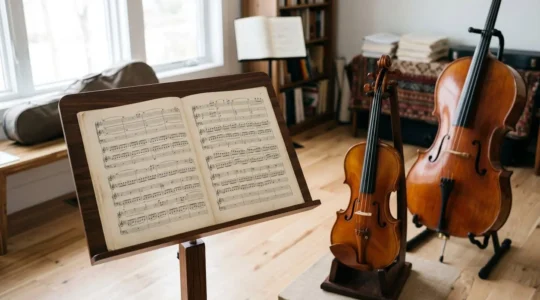
The Arranger’s Art: How to Adapt Any Melody for a New Instrumentation
A successful arrangement transforms a melody into a new textural organism, not just a note-for-note transcription. Instrument choice is dictated by timbral color and spectral weight, not just pitch range. Harmonic recontextualization—changing the chords beneath a melody—is the most powerful…
Lire la suite
The Songwriter’s Toolbox: The Art and Science of Lyrics and Melodies That Stick
In summary: Effective songwriting marries melody to the natural rhythm of speech (prosody) to feel intuitive. Emotion is conveyed through specific, sensory details (« show, don’t tell »), not abstract statements. Simple, repetitive choruses are psychologically « sticky, » creating memorable earworms. Internal rhymes…
Lire la suite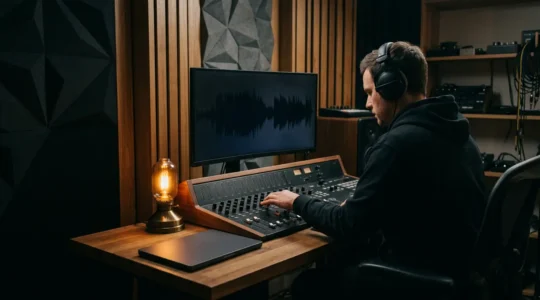
The Producer as Visionary: Shaping the Sonic Identity of an Artist
The common belief is that a producer’s job is to master the recording software, but the truth is that technology is the least important part of the role. A producer’s primary function is psychological and strategic: to unearth an artist’s…
Lire la suite
The Conductor’s Baton: Leading Without Speaking a Word
Effective conducting is not the art of time-keeping, but the science of shaping human response through silent, predictive leadership. A conductor’s primary role is to build a shared mental and emotional framework—a « cognitive architecture »—for the musicians before a note is…
Lire la suite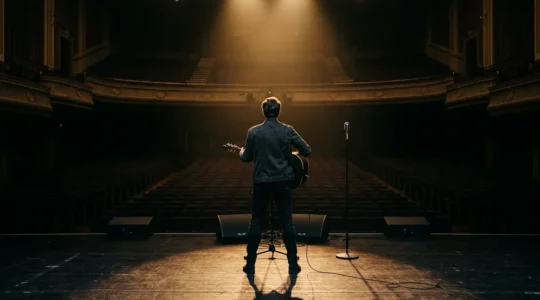
The Performer’s Mindset: Overcoming Stage Fright and Owning the Room
Contrary to popular belief, stage fright isn’t a mental weakness to be overcome with willpower; it’s a physiological event that can be actively managed and controlled. Your body’s fight-or-flight response, triggered by adrenaline, can be « hijacked » using specific breathing techniques…
Lire la suite
The Modern Composer: From Pencil and Paper to DAW Scoring
Modern composing isn’t about choosing between paper and pixels; it’s about mastering a hybrid workflow that blends timeless artistic principles with powerful digital tools. Develop narrative depth through thematic architecture, not just simple melodies. Select software (notation vs. DAW) based…
Lire la suite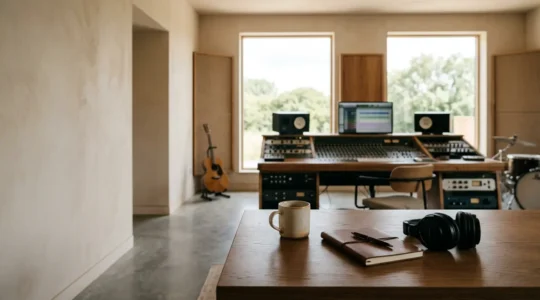
Beyond the Spotlight: Unpacking the Core Functions Driving the Music Industry
A sustainable career in music hinges less on a single job title and more on mastering a specific operational function that adds tangible value to the creative ecosystem. Success isn’t about just being « in music » but about excelling in strategic…
Lire la suite