Music & kids
Music is far more than a simple source of entertainment for children; it is a foundational pillar of human development. From the earliest moments of infancy, when a simple lullaby establishes a profound sense of security and attachment, to the turbulent teenage years where a roaring guitar offers a vital emotional outlet, musical interaction shapes the human experience. Introducing children to music and instruments goes beyond teaching them how to read notes or play a melody; it provides them with essential tools to navigate the world.
Whether you are wondering if your toddler is ready for piano lessons, or trying to understand why your teenager needs to play the drums so loudly, understanding the intersection of music and child development is crucial. This comprehensive resource explores how musical engagement physically alters the developing brain, builds critical motor skills, and fosters emotional resilience.
Cognitive Symphony: How Music Shapes the Developing Brain
It is a common misconception that simply playing classical music in the background will automatically boost a child’s intelligence. While ambient music can create a calming environment, true cognitive development requires active engagement. When a child participates in making music, their brain undergoes profound structural changes.
Active Participation Over Passive Listening
The myth that passive exposure to Mozart creates genius babies has been largely debunked by developmental experts. Active musical participation—such as singing along, shaking a tambourine, or clapping to a beat—is what truly stimulates brain growth. When children actively engage with music, they are forced to process auditory, visual, and motor information simultaneously. This multi-sensory processing strengthens the corpus callosum, bridging the left and right hemispheres of the brain. Because musicians constantly bridge these hemispheres, they naturally develop a superior ability to multitask and process complex information compared to non-musicians.
Building Neural Pathways for Math and Reading
Music is inherently mathematical and linguistic. Introducing children to beats and rhythmic patterns lays the groundwork for understanding sequences, fractions, and spatial reasoning. Similarly, the relationship between singing and speaking is deeply intertwined. Here is how active musical play prepares the brain for academic success:
- Language acquisition: Rhythm helps babies parse sentences and learn words by breaking down continuous speech into distinct syllables.
- Reading readiness: Songs rich in rhyme and meter prepare the brain for reading by enhancing phonological awareness.
- Speech processing: Musicians develop an enhanced ability to isolate specific sounds, explaining why children with musical training often understand speech better in crowded, noisy rooms.
- Memory retention: Lullabies and melodic storytelling help babies and young children encode memories and remember the events of their day.
Physical Harmony: From Gross Motor Skills to Fine Dexterity
Learning an instrument is essentially a full-body workout for the nervous system. Before a child can delicately press a piano key, they must first master the rhythmic control of their entire body.
Rhythm and Whole-Body Coordination
Simple rhythmic activities are vital for early motor development. When toddlers stomp their feet to a heavy beat, they are actively developing their gross motor skills, improving balance, and refining their gait. As they progress to more complex actions, such as drumming with both the left and right hands, they engage in cross-lateral movements. Crossing the midline of the body in this way builds vital neural connections that later assist with visually tracking words across a page during reading.
The Ultimate Brain Gym: Keyboards and Strings
As children transition to actual instruments, the focus shifts to fine motor skills. Playing the piano or guitar builds lifelong dexterity and hand-eye coordination. Instruments demand a unique level of physical independence:
Playing the piano requires two hands to perform two completely different jobs simultaneously, while strings demand acute spatial awareness—knowing exactly where your fingers are in space without looking. Furthermore, holding a shaker or gripping a guitar pick develops the fine motor pincer grasp, while the strength required for a proper violin bow hold directly translates to better pencil grip and handwriting control in school.
Emotional Regulation: Finding a Voice Through Instruments
Beyond the physical and cognitive benefits, music serves as a profound psychological tool. It provides a safe container for big emotions, helping children and teenagers regulate their nervous systems.
Teaching Impulse Control in Early Childhood
For toddlers and young children, learning to stop and go is a monumental developmental task. Rhythm games are incredibly effective at teaching self-regulation. For instance, the classic ‘Freeze Game’ or musical statues teaches phrasing, cadence stops, and, most importantly, impulse control. By anticipating the silence and forcing their bodies to stop moving, children strengthen their prefrontal cortex, the area of the brain responsible for inhibition control and decision-making.
A Safe Outlet for Teenage Angst
As children enter their teenage years, music often defines their identity. It becomes a crucial emotional outlet. Teenagers sometimes need to play their instruments loudly, or scream together in a garage band, to physically release pent-up tension and lower cortisol levels. When words fail, instruments speak. Practices like ‘journaling in verse’ or writing lyrics allow adolescents to turn angst into art safely, while curating ‘calm down’ playlists provides them with autonomous tools for mood management.
The Social Dynamics of Joining the School Band
Participating in a school band or ensemble teaches life lessons that extend far beyond reading sheet music. It is a masterclass in collaboration, empathy, and social responsibility. The pressure of a concert deadline teaches students how to deliver as a group and handle performance anxiety collectively.
Being part of a band also requires understanding group dynamics. A student learns that their part isn’t always the most important and that blending their sound with others is an act of humility and teamwork. Conversely, they also learn the impact of the ’empty chair’—realizing that their absence negatively affects the whole group. For older children, becoming a section leader offers an early opportunity to learn how to manage peers and lead with empathy rather than being bossy.
Introducing Instruments: Keeping the Magic Alive
The key to fostering a lifelong love of music is ensuring that the introduction to instruments remains playful and driven by curiosity, rather than rigid discipline. Making music a chore is the fastest way to extinguish a child’s natural enthusiasm.
Everyday Rhythms and Playful Games
You do not need an expensive instrument to start teaching music. A ‘kitchen orchestra’ made from recyclables, pots, and wooden spoons is perfect for exploring divergent thinking and improvising noise. Before starting formal lessons, parents can utilize specific games to teach timing and coordination:
- Simon Says Rhythm: Copying physical beats and claps without relying on a screen.
- The Echo Game: Developing the vital ear-hand connection by repeating melodic phrases.
- The Cup Song Technique: Teaching advanced coordination and polyrhythms for older kids.
Signs Your Child is Ready for Formal Lessons
Determining if a child is ready for structured instrument lessons involves assessing both physical and mental milestones. It is crucial for parents to separate their own dreams from the child’s actual desire to learn. Here is a practical sequence to evaluate mental readiness:
- The Focus Threshold: Can the child focus on a single, moderately challenging task for at least 15 minutes? This is the minimum requirement for a beginner piano or guitar lesson.
- Physical Independence: Can they wiggle just one finger at a time while keeping the others still? This indicates the fine motor isolation required for most instruments.
- The Meltdown Test: How does the child handle not being perfect instantly? Learning an instrument requires high frustration tolerance. If mistakes cause immediate, uncontrollable meltdowns, they may need more time playing casual rhythm games to build resilience.
- Symbolic Understanding: While they do not necessarily need to read text fluently to read music, they must understand that a symbol on a page represents a specific sound and action.
Ultimately, the goal of musical education is not to mold a prodigy, but to provide a child with a rich, multi-sensory language that will support their cognitive health, physical coordination, and emotional well-being throughout their entire life. By embracing active participation, playful exploration, and the right timing for formal instruction, parents can give their children the lifelong gift of music.
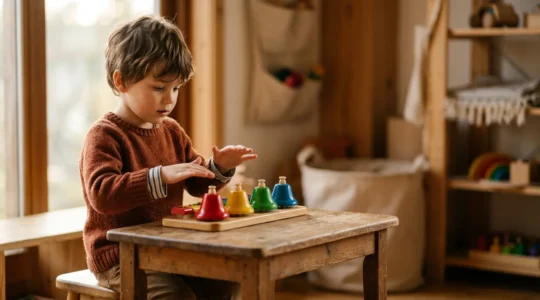
Is Your Child Ready for Formal Lessons? Signs of Mental Readiness
Contrary to popular belief, a child’s readiness for music lessons has little to do with their age or knowing the alphabet; it’s about the convergence of developing cognitive and emotional skills. True readiness is marked by the ability to manage…
Lire la suite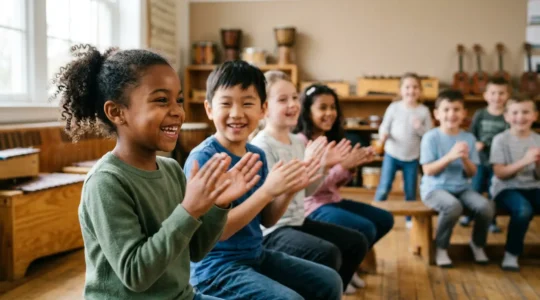
Best Rhythm Games to Teach Timing Before Starting Lessons
The biggest secret to musical readiness isn’t endless practice; it’s building a deep, intuitive sense of rhythm through intentional play before lessons even start. Digital games like Rhythm Cat are effective, but only when you actively transfer those skills from…
Lire la suite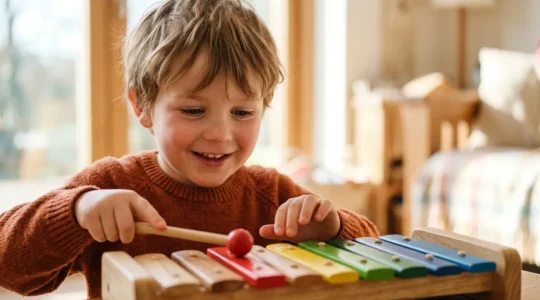
How to Introduce Music to Kids Without Making It a Chore?
In summary: Shift your mindset from « teaching » music to « playing » with sound in a pressure-free environment. Use everyday objects, storytelling, and body movement to make musical concepts tangible and fun. Focus on process over product, celebrating experimentation and creative noise-making….
Lire la suite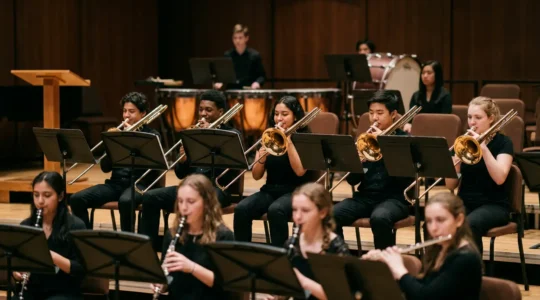
Why Joining the School Band Teaches More Than Just Music
School band is your child’s first, low-stakes training ground for the high-pressure world of professional collaboration. It teaches tangible project management skills by forcing a diverse group to meet a non-negotiable deadline—the concert. It develops nuanced peer leadership and ego…
Lire la suite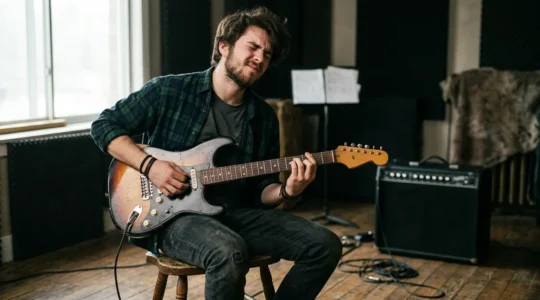
The Noise is the Signal: Why Your Teen’s Loud Music is a Healthy Emotional Outlet
Contrary to the fear that loud, angry music is a sign of trouble, it’s often a sophisticated emotional tool. This article reveals that what sounds like chaos is actually your teen’s non-verbal way of processing pain, managing stress, and building…
Lire la suite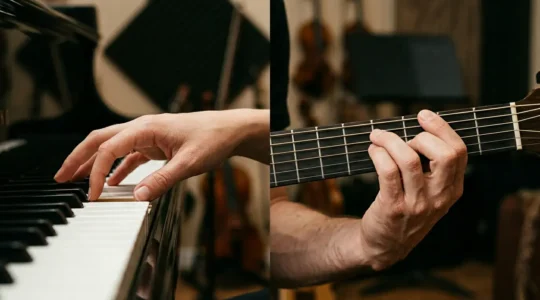
Unlocking Dexterity: How Piano and Guitar Reprogram Your Hands for Lifelong Skill
Playing an instrument is not just a hobby; it is a powerful neurological program for developing superior fine motor skills that translate directly to everyday life. It trains each hand to perform independent, complex tasks, strengthening the connection between the…
Lire la suite
Why Simple Rhythmic Activities Are Vital for Early Motor Development
It’s more than just cute: your toddler’s wobbly dance is the essential groundwork for building a sophisticated brain and body. Rhythmic play builds a physical « body map » (proprioception) and strengthens the brain’s information superhighway (corpus callosum). Activities that cross the…
Lire la suite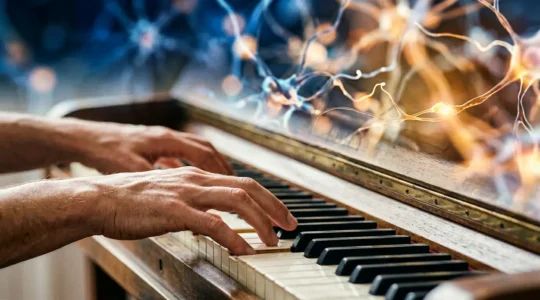
How Learning an Instrument Physically Changes Your Brain
Learning an instrument is a form of precise neuro-engineering that physically remodels critical brain structures, enhancing cognitive function far beyond simple memory improvement. It thickens the corpus callosum, the bridge between brain hemispheres, directly improving multitasking and problem-solving skills. It…
Lire la suite
Why Passive Exposure to Mozart Won’t Make Your Baby a Genius
The greatest cognitive gifts from music aren’t downloaded from a playlist; they’re built through active participation. Passively playing classical music has a negligible effect on a child’s long-term cognitive abilities. Actively engaging in music—singing, clapping, learning an instrument—physically restructures the…
Lire la suite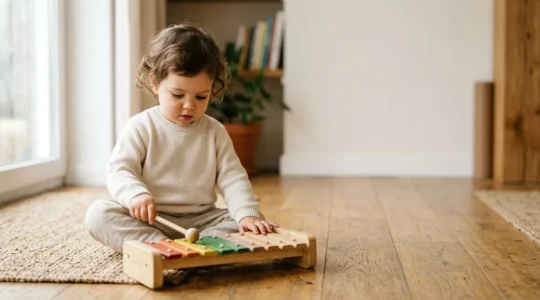
Why Is Music Vital for Early Childhood Cognitive Development?
Contrary to the belief that toddler music classes are just ‘fun and games,’ they are actually one of an infant’s first and most critical lessons in cognitive architecture. Musical interaction builds the brain’s foundation for language by teaching rhythm and…
Lire la suite