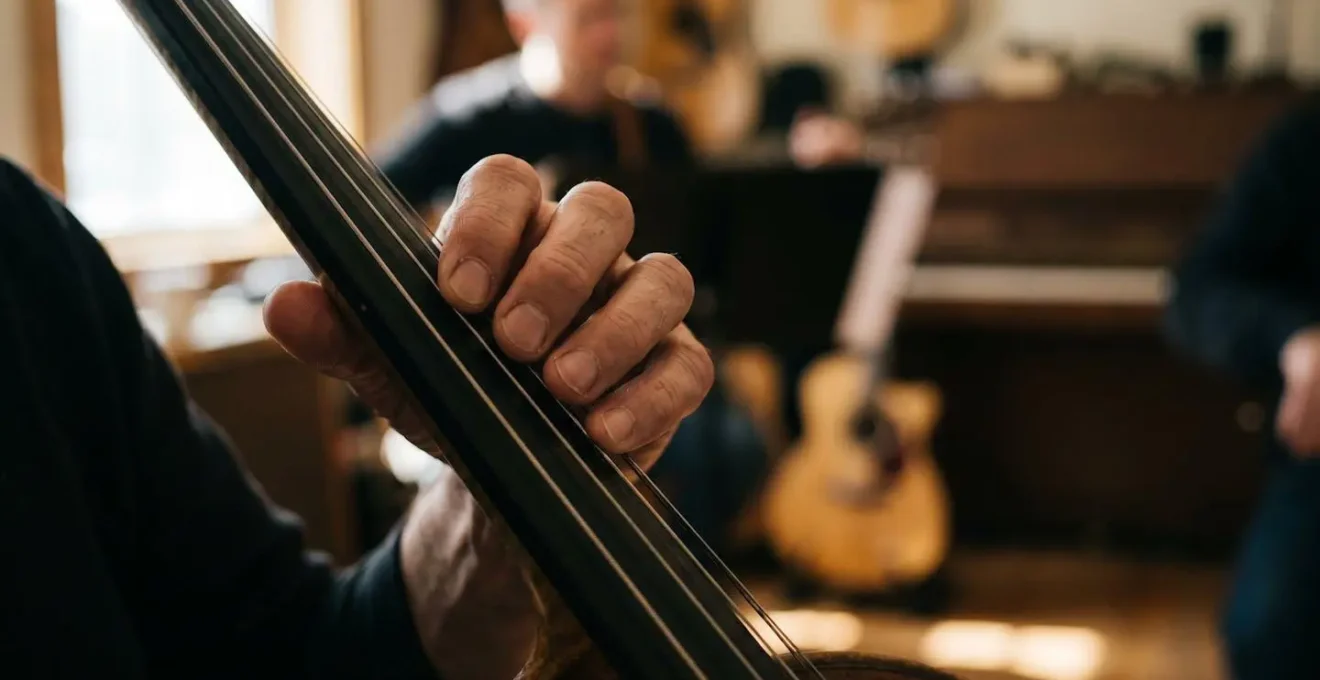
True speed is not achieved by moving fingers faster, but by eliminating wasted motion and neurological friction.
- Fingering technique is a problem of biomechanical efficiency, where small adjustments in posture, thumb placement, and finger pressure yield massive gains in speed and reduce injury risk.
- Developing finger independence and control is a form of targeted neuroplasticity, rewiring the brain to overcome anatomical limitations.
Recommendation: Shift your practice focus from muscular force to ergonomic precision; analyze and refine one small aspect of your physical technique at a time.
For many instrumentalists, hitting a plateau in speed and accuracy is a deeply frustrating experience. Hours of practice with a metronome can feel like they lead nowhere, with fingers that feel clumsy, tense, or simply unwilling to cooperate. The common advice—to simply « practice more » or « push through it »—often ignores the fundamental issue. This approach treats the hand like a brute-force tool, when it is, in fact, a highly sophisticated neurological and biomechanical system.
The pursuit of dexterity is often framed as a quest for muscular strength, but this is a misconception. True mastery of fingering technique is not about building bigger muscles in your forearm; it’s about cultivating neurological efficiency, ergonomic intelligence, and a profound understanding of the tension-relaxation cycle. What if the secret to unlocking your speed wasn’t in adding more effort, but in strategically removing it? What if the key to accuracy lay not in your fingers alone, but in the stability of your thumb, the alignment of your spine, and the openness of your chest?
This guide deconstructs fingering technique from a biomechanical and ergonomic perspective. We will move beyond generic exercises to explore the physics of efficient movement. We will analyze the anatomical constraints that hold you back and present specific strategies to rewire your brain to overcome them. From the micro-movements of your fingertips to the macro-ergonomics of your posture, you will learn to think of your body not as a limitation, but as the ultimate tool for musical expression, one that can be optimized for speed, accuracy, and lifelong comfort.
To navigate this deep dive into the science of speed and comfort, the following sections will break down each critical component of your technique. This structured approach will allow you to diagnose and systematically improve your playing from the ground up.
Table of Contents: A Biomechanical Guide to Fingering Technique
- Flying Fingers: Why Lifting Too High Slows You Down
- The Pivot Point: Where Should Your Thumb Be on the Neck?
- The Spider Walk: Separating Ring and Pinky Finger Action
- Tension Kills Speed: Learning to Relax While Playing Fast
- Standard vs Custom: When to Break the Rules for Flow
- Slouching Kills Tone: Standing Tall to Open the Lungs
- The Fourth Finger Challenge: Strengthening the Weakest Link
- Fine Motor Skills: How Piano and Guitar Build Dexterity for Life
Flying Fingers: Why Lifting Too High Slows You Down
The most common yet subtle thief of speed is wasted motion. « Flying fingers »—the tendency for fingers to lift high off the fretboard or keys after playing a note—is a prime example. From a physics standpoint, every millimeter of extra distance your finger travels is time and energy lost. To play fast, your fingers must travel the shortest possible path. This is not a matter of strength, but of neurological efficiency. Your goal should be to keep your fingers as close to their next position as possible, creating an economy of motion that is both fast and relaxed.
This principle is rooted in motor learning. Your brain learns patterns of movement, and if it learns an inefficient pattern (lifting high), that pattern becomes automated. The key is to consciously retrain your brain for minimal movement. Practicing slowly with an intense focus on keeping non-playing fingers low and ready is a form of targeted neuroplasticity. Indeed, research on motor skill acquisition demonstrates that the ring and little fingers show a marked decrease in unintentional co-movement after only a few days of focused piano practice, proving how quickly the brain can refine its control signals when given a clear, efficient task.
Playing with relaxed muscles improves your power and range of motion as well as endurance, speed, and control.
– Tamara Mitchell, A Painful Melody: Repetitive Strain Injury Among Musicians
Ultimately, controlling « flying fingers » is the first step in mastering the tension-relaxation cycle. It teaches your hand that the default state is one of relaxed readiness, not of panicked, high-flying action. By minimizing lift, you conserve energy, reduce strain, and lay the biomechanical foundation for true speed.
The Pivot Point: Where Should Your Thumb Be on the Neck?
If the fretting fingers are the actors on stage, the thumb is the invisible but essential stagehand controlling the entire mechanism. Its position behind the neck or under the keyboard is not passive; it is the ergonomic baseline that dictates the angle, reach, and force of the other four fingers. An improperly placed thumb creates a cascade of inefficiencies, forcing the wrist into awkward angles and causing the hand to clench with tension. The ideal placement creates a stable pivot point, allowing the fingers to move with freedom and precision.
For guitarists, this typically means keeping the thumb pad centered on the back of the neck, roughly opposite the index or middle finger. This creates a « force couple »—a balanced opposition of pressure between the thumb and the fretting finger, maximizing force on the string with minimal muscular effort. Letting the thumb creep over the top of the neck can feel comfortable for bending, but as a default position, it collapses the hand’s structure and limits the pinky’s reach.
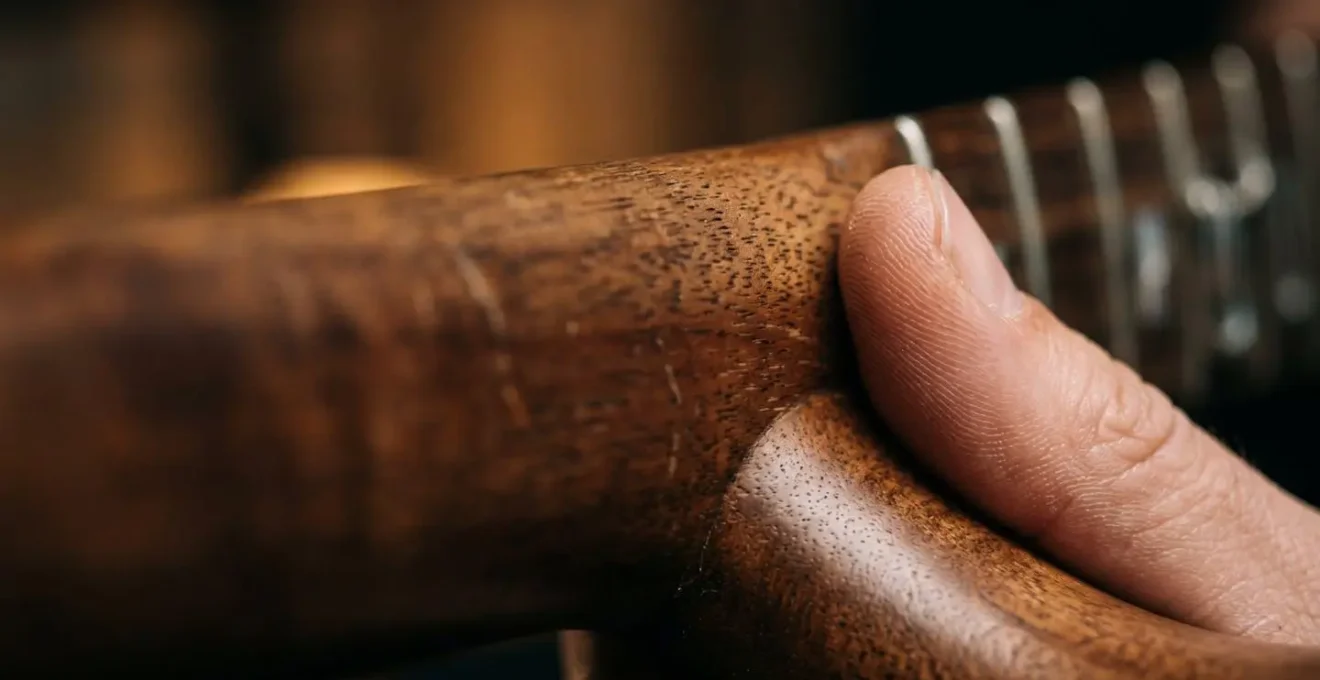
Case Study: The Link Between Thumb Position and Repetitive Strain Injury
The consequences of poor thumb mechanics are not just technical, but medical. A 2018 study on injury prevention in guitarists identified that many common musician ailments, including carpal tunnel syndrome and tendinitis, are directly linked to faulty technique. The research highlighted that excessive wrist flexion or extension, often caused by improper thumb anchoring, leads to repetitive strain. This demonstrates that correct thumb positioning is not merely a « best practice » for speed; it is a critical component of playing sustainability and injury prevention.
Think of your thumb as the foundation of a house. If the foundation is unstable or poorly positioned, the entire structure becomes weak and prone to collapse. By establishing a solid, consistent, and biomechanically sound pivot point, you provide your fingers with the stable platform they need to perform at their peak.
The Spider Walk: Separating Ring and Pinky Finger Action
One of the most common technical hurdles for any instrumentalist is achieving true independence between the ring and little fingers. The frustration is real: when you try to move one, the other seems to have a mind of its own, either moving in sympathy or locking up entirely. This isn’t a sign of weakness; it’s a direct result of your anatomy. The tendons controlling these two digits are often interconnected, making separate movement inherently difficult.
This physical reality is confirmed by science. As anatomical research published in the Journal of Anatomy reveals that there is strong synchronization between the motor neurons for adjacent fingers, which is particularly pronounced for the ring and little fingers due to shared tendons in the extensor digitorum communis. Overcoming this requires targeted practice designed to build new, independent neurological pathways—effectively teaching your brain to send more precise signals to bypass the physical « crosstalk. » This is the essence of developing motor independence.
Exercises like the « spider walk » on the instrument are famous for this purpose. However, you can start building these neurological pathways even without your instrument. The following exercise helps isolate and strengthen the signals to your ring and pinky fingers.
Action Plan: Off-Instrument Finger Independence Training
- Place your hand flat on a table or desk surface with all fingers extended.
- Hold your index, middle, and pinky fingers firmly against the surface with your other hand.
- Attempt to lift only the ring finger while keeping the others completely stationary.
- Hold the lifted position for 5 seconds, then relax.
- Repeat 10 times, then switch to lifting only the pinky while holding the others down.
By consistently practicing this type of isolation, you are not just stretching tendons; you are engaging in a sophisticated form of brain training, carving out the distinct neural highways needed for effortless and independent finger action.
Tension Kills Speed: Learning to Relax While Playing Fast
The single greatest enemy of speed, accuracy, and endurance is unnecessary tension. Many players subconsciously believe that to play faster, they must try harder, which manifests as physical tension—a clenched jaw, a raised shoulder, or a death grip on the instrument’s neck. This is a biomechanical fallacy. Tension recruits antagonist muscles that fight against the desired motion, effectively forcing you to play with the brakes on. True speed comes from a state of dynamic relaxation, where only the exact muscles needed for a specific note are engaged, and for only the briefest possible moment.
This concept is known as the tension-relaxation cycle. It’s the ability to apply precise, minimal pressure to fret a note or press a key, and then immediately release that pressure the instant it’s no longer needed. This requires a high degree of body awareness. You must become a detective, constantly scanning your body for hidden pockets of tension—in your forearm, your bicep, your neck, your back—and consciously releasing them. Playing in front of a mirror can be revelatory, exposing postural habits and tense muscles you never knew you had.
The link between physical comfort and performance is not just a feeling; it has measurable outcomes. For instance, a 2022 study in PLOS ONE found that guitar players who maintained physically comfortable postures during playing had fewer painful joints and lower severity of pain in their shoulders and lower back. This reinforces the idea that comfort and relaxation are not luxuries, but prerequisites for high-level, sustainable playing. The less energy you waste fighting your own body, the more you have available for musical expression.
Standard vs Custom: When to Break the Rules for Flow
Music education is filled with « correct » ways to finger a scale or a passage. These standard fingerings are invaluable starting points, as they are typically based on principles of efficiency and have been refined over generations. However, rigidly adhering to them without question can be a barrier to achieving your personal best flow and speed. The ultimate goal is not to conform to a universal standard, but to find the fingering that is most biomechanically advantageous for your unique hands.
Every person’s hand is different—finger length, tendon flexibility, and muscular strength vary enormously. A fingering that is effortless for a concert pianist with long fingers may be physically awkward or impossible for someone with a smaller hand. This is where developing a custom, ergonomic approach becomes crucial. After learning the standard fingering, you must give yourself permission to experiment. Could shifting your hand position slightly allow for a smoother transition? Would using a « forbidden » finger (like the thumb on a black key for pianists) solve a difficult passage? If it’s more reliable, more comfortable, and sounds better, it *is* the correct fingering for you.
Case Study: Individual Biomechanics Trump Training Duration
Scientific evidence supports this personalized approach. A 2019 study in Scientific Reports made a profound discovery: individual differences in finger dexterity among pianists were associated more with their innate mechanical finger coupling and muscle strength than with their total hours of training. This strongly suggests that a player’s natural biomechanics play a massive role in their technical ceiling. The lesson is clear: optimal technique must be built around your personal anatomy, not in spite of it. This validates the strategy of developing personalized fingerings that leverage your unique biomechanical advantage.
Breaking the rules should be an informed decision, not an act of ignorance. First, learn the standard. Understand the principle it’s trying to teach. Then, analyze it against your own physical mechanics. If you find a better way that is consistently repeatable and more fluid, embrace it. This is the path from being a student of technique to becoming a master of your own instrument.
Slouching Kills Tone: Standing Tall to Open the Lungs
Fingering technique doesn’t happen in a vacuum. The micro-movements of your fingers are supported by the macro-ergonomic system of your entire body. The most critical component of this system is your posture. Slouching or hunching over your instrument does more than just look unprofessional; it actively sabotages your playing. It restricts your diaphragm, leading to shallow breathing, which in turn creates physical tension and robs your music of its dynamic foundation. A stable, supported core and open chest are non-negotiable for effortless playing.
Whether sitting or standing, the principles are the same: maintain a tall, natural spine, relax your shoulders down and away from your ears, and allow your chest to be open and uncompressed. This « power posture » doesn’t just improve breathing and reduce back pain; it has a direct psychological effect. It sends a signal to your brain that you are calm, confident, and in control. This can be a powerful tool for managing performance anxiety, creating a positive feedback loop where good posture leads to better playing, which leads to more confidence.

The psychological impact of posture is surprisingly potent. A 2017 quasi-experimental study on body consciousness found that musicians adopting an expansive, « superman-like » posture reported significantly greater reductions in perceived anxiety compared to those who adopted a slumped posture. This shows that your physical stance directly influences your mental and emotional state, which is inextricably linked to your musical output. Proper posture isn’t just about ergonomics; it’s about setting the physical and mental stage for success.
The Fourth Finger Challenge: Strengthening the Weakest Link
The fourth finger (ring finger) is the perennial problem child of the hand for most musicians. It often feels weak, clumsy, and neurologically « tethered » to its neighbors. As we’ve established, this is due to the shared tendinous connections within the hand’s anatomy. Many musicians, frustrated by this weak link, either avoid using it or overcompensate with force, leading to tension and poor technique. The solution is not to ignore it, but to embark on a targeted campaign of strengthening and isolation.
Strengthening the fourth finger isn’t about building bulk muscle. It’s about two things: neurological isolation and building functional strength at the point of contact. This means practicing exercises that force the fourth finger to work independently. Trills, scales, and arpeggios that are specifically designed to lead with or pivot on the fourth finger are invaluable. The key is to execute them slowly and with perfect, relaxed form, focusing on a clean attack and release. You are teaching your brain that the fourth finger is a viable, independent digit.
With practice, however, it is possible to increase or decrease the degree of synchronization, which will enhance the level of control that can be exerted over individual fingers.
– Watson et al., Journal of Anatomy
This expert insight is crucial: your anatomical predisposition is not your destiny. While the ring finger is naturally less independent, dedicated practice can enhance the brain’s ability to control it. By accepting the challenge and working with patience and precision, you can transform your weakest finger from a liability into a reliable asset, fully integrated into your technical arsenal.
Key Takeaways
- Efficiency Over Force: Speed is a byproduct of eliminating wasted motion and tension, not of applying more muscular effort.
- Ergonomics is Holistic: Your technique is a system, where the stability of your thumb and the alignment of your spine directly impact the dexterity of your fingertips.
- Practice is Brain Training: Improving technique is a process of targeted neuroplasticity, rewiring your brain for more precise and independent motor control.
Fine Motor Skills: How Piano and Guitar Build Dexterity for Life
The journey to improve fingering technique, while focused on musical goals, yields benefits that extend far beyond the instrument. The process of mastering fine motor skills is one of the most intensive and effective forms of cognitive training available. Each time you practice a difficult passage, you are not just moving your fingers; you are actively forging and reinforcing complex neural pathways, enhancing the communication between your brain, ears, and hands.
This intensive training leads to observable changes in the brain’s structure and function—a phenomenon known as neuroplasticity. Musicians’ brains often show increased gray matter volume in motor, auditory, and visuospatial areas. The corpus callosum, the bundle of nerve fibers connecting the brain’s two hemispheres, is also often larger, indicating enhanced communication. For example, according to research published in Dementia & Neuropsychologia, professional musicians who accumulate over 10,000 hours of practice by age 20 undergo significant structural and functional neuroplastic changes, creating measurable cognitive differences.

Case Study: Musical Practice Creates Transferable Sensory-Motor Enhancements
A 2016 study in Scientific Reports demonstrated that the benefits are not confined to music. By examining expert pianists, researchers found that musical training sharpens the brain’s general ability to interpret sensory feedback and translate it into precise motor actions. This enhanced sensory-motor integration is a transferable skill, applicable to countless other tasks in life that require dexterity and hand-eye coordination. The study concluded that musical practice creates a virtuous cycle where superior sensory function allows for the development of finer motor control, which in turn further refines sensory perception.
Therefore, every hour spent patiently untangling a complex fingering or perfecting the independence of your fingers is an investment in your cognitive health. You are not just learning to play music; you are building a more connected, efficient, and resilient brain for life.
Apply these biomechanical principles to your daily practice, starting with the smallest, most deliberate movements, to begin the process of rebuilding your technique on a foundation of efficiency and ergonomic intelligence.