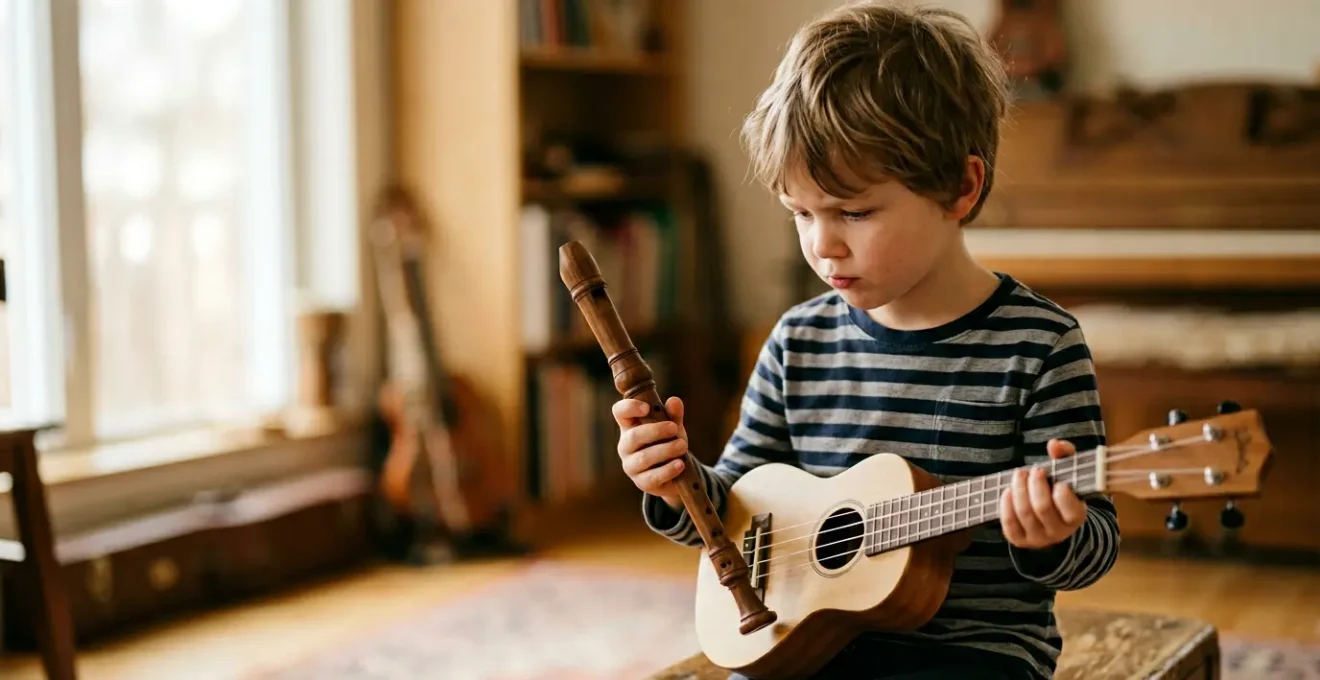
The best first instrument for a 6-year-old isn’t the most impressive one; it’s the one that builds their confidence the fastest.
- Success hinges on the « physical fit »—matching the instrument’s demands (breath, finger size) to your child’s developmental stage.
- Prioritize instruments that offer a « quick win » by producing a pleasant melody almost immediately, which fuels motivation.
Recommendation: Before buying anything, conduct a « touch and try » experiment at home to see which instrument your child naturally gravitates toward.
As a primary school music teacher, I see the same question in parents’ eyes every year: « Which instrument should I get for my child? » The debate often boils down to the classic, school-issued recorder versus the trendy, friendly ukulele. It’s a decision fraught with visions of future rock stardom on one hand and the dread of incessant, high-pitched squeaking on the other. Parents often feel pressured to choose the « right » path, believing this first step will determine their child’s entire musical future. They research the benefits of piano for music theory or worry that a « simple » instrument isn’t serious enough.
But let’s set aside the conservatory ambitions for a moment. For a six-year-old, the goal isn’t mastery; it’s engagement. The initial experience with an instrument is less about technical proficiency and more about a simple, joyful discovery: « I can make music! » Frustration is the enemy of fun, and an instrument that is too big, too heavy, or too complex will quickly become a dust-collector.
What if the key isn’t finding the single best instrument, but rather the best developmental match for your child right now? This guide is built on that principle. We’re going to look beyond the platitudes and evaluate these common starter instruments based on what truly matters for a young beginner: the physical fit, the potential for a « quick win » to build confidence, and, yes, a consideration for parental sanity. We will explore why the humble recorder has hidden benefits, why the ukulele is so popular, and what other fantastic, often-overlooked options exist.
This article will walk you through the practical pros and cons of each choice from a teacher’s perspective. By the end, you’ll have a framework not just for picking an instrument, but for understanding your child’s readiness and ensuring their first musical steps are happy ones.
Summary: Recorder vs Ukulele: A Guide for Parents
- Why Is It Always the Recorder? The Breath Control Benefit Explained
- 4 Strings, Small Neck: Why Uke Is Easier Than Guitar for Small Hands
- Weighted Keys: Do You Need Them for a 5-Year-Old Beginner?
- Hand Drums: The Indestructible Option for High Energy Kids
- The 4-Hole Ocarina: Instant Melody Gratification
- Touch and Try: Letting Kids Handle Real Instruments Safely
- Who Wants This? Separating Your Dream from Their Desire
- Is Your Child Ready for Formal Lessons? Signs of Mental Readiness
Why Is It Always the Recorder? The Breath Control Benefit Explained
Let’s be honest: the soprano recorder gets a bad rap. For many parents, its sound is synonymous with ear-splitting school concerts. But there’s a profound pedagogical reason it’s a classroom staple, and it goes far beyond its low price point. The recorder is one of the best tools for teaching a foundational musical skill that benefits a child’s entire life: conscious breath control. To produce a steady, pleasant tone, a child can’t just blow; they must use a gentle, focused, and consistent stream of air from their diaphragm. It’s a physical lesson in moderation and control.
This skill isn’t just musical. It’s a form of mindfulness. Developing the ability to regulate breath has been linked to improved focus and cognitive function. In fact, a 2023 study found that daily breathing exercises significantly improved children’s arithmetic test performance. The recorder turns this abstract exercise into a tangible game with immediate auditory feedback. A harsh sound means « too much air, » while a weak sound means « not enough. » This direct cause-and-effect is a powerful teacher for a six-year-old.
However, simply handing a child a recorder isn’t enough. As Jelena Obradović of the Stanford Graduate School of Education noted in a study on childhood stress regulation:
This study is the first to show that taking a few slow, deep breaths in an everyday setting can have a significant effect on a child’s stress physiology. But just telling children to take a deep breath may not be enough – children need scaffolding.
– Jelena Obradović, Stanford Graduate School of Education, Developmental Psychobiology study
The recorder provides that very scaffolding. Covering the holes teaches fine motor skills, and the simple progression from one note to the next offers a clear path to playing a recognizable tune like « Hot Cross Buns » within the first few sessions. This provides the « quick win » that is so crucial for maintaining a young child’s interest and building their musical confidence.
4 Strings, Small Neck: Why Uke Is Easier Than Guitar for Small Hands
If the recorder is the classic academic choice, the soprano ukulele is the free-spirited, popular kid. Its appeal is immediate and obvious. With its small body, short neck, and light weight, it’s perfectly proportioned for a young child’s lap and arms. This excellent « physical fit » means a six-year-old can hold it comfortably and maintain good posture, avoiding the frustration of wrestling with a bulky instrument like a dreadnought guitar.
The real magic, however, lies in the strings. The four soft, nylon strings are gentle on sensitive fingertips, a stark contrast to the steel strings of a guitar that can be genuinely painful for a beginner. This eliminates a major physical barrier to practice. Furthermore, many fundamental chords on the ukulele require only one or two fingers. A C-chord, often the very first one taught, is made by simply pressing down one string with one finger. This is a monumental advantage, as it delivers an almost instantaneous feeling of success. The child can strum and sing along to a song from their very first lesson.
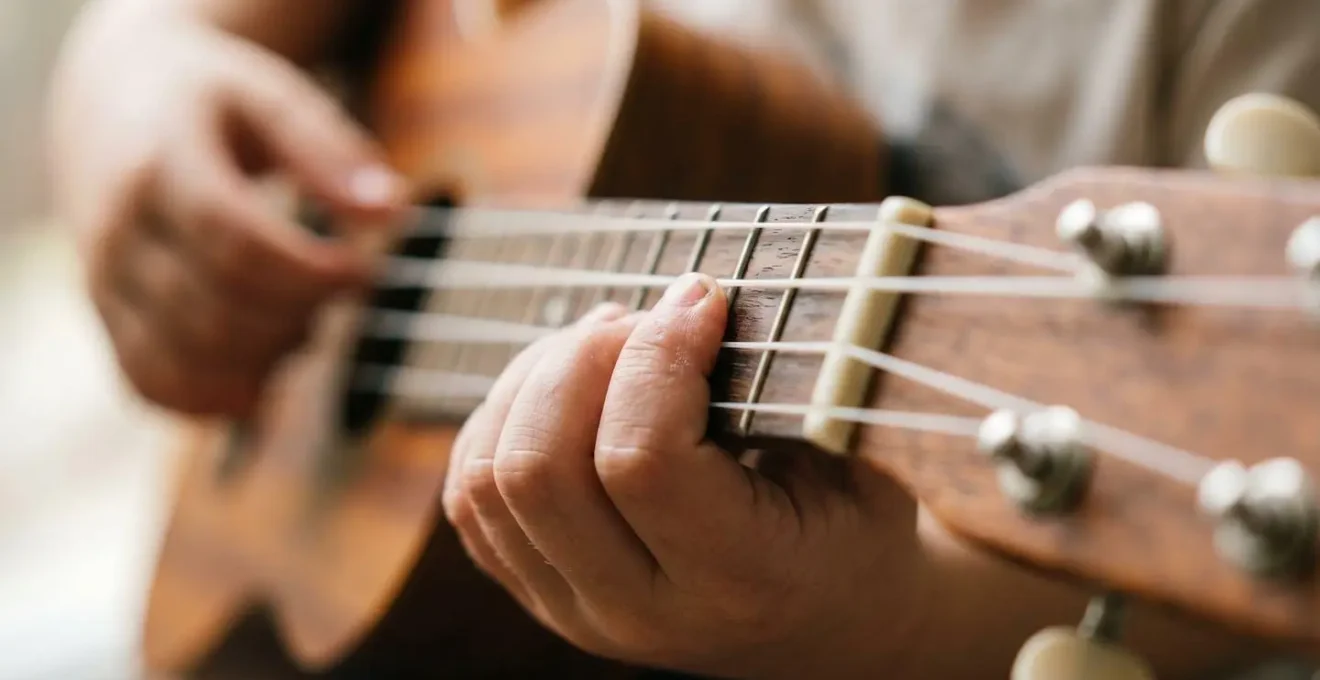
This accessibility is why ukulele education specialists find that children can start ukulele as early as 6 or 7 years old. The instrument’s design is inherently forgiving and encourages experimentation. While a guitar requires precise finger pressure and placement to avoid buzzing, a ukulele is much more likely to produce a pleasant, cheerful sound even with less-than-perfect technique. This immediate, positive feedback loop is a powerful motivator, turning practice from a chore into a rewarding activity. It’s a fantastic confidence catalyst, showing a child they are capable of creating harmony and rhythm on their own.
Weighted Keys: Do You Need Them for a 5-Year-Old Beginner?
Many well-meaning parents are drawn to the piano or a digital keyboard as a first instrument, often guided by the belief that it provides the best foundation in music theory. This leads to an immediate, and often expensive, question: do we need a keyboard with weighted keys? The short answer, from a practical, child-focused perspective, is no. In fact, for a five or six-year-old, unweighted keys are often better.
Weighted keys are designed to mimic the feel of an acoustic piano, where pressing a key activates a hammer mechanism to strike a string. This requires a certain amount of finger strength and control. For a young child whose fine motor skills are still developing, fighting against this resistance can be tiring and frustrating. The goal is to make sound production as effortless as possible. A keyboard with « synth-action » or unweighted keys allows a child to produce a clear note with a light touch, providing that essential quick win.
From a budget-conscious standpoint, this is also a huge relief for parents. A simple 61-key portable keyboard without weighted keys is significantly more affordable than an 88-key digital piano. At this early stage, you are not investing in a lifelong instrument; you are investing in an exploratory tool. You are buying an experiment to see if your child enjoys making melodies and interacting with a key-based layout. Spending a lot of money on professional features like weighted keys is premature and adds unnecessary pressure to the experience. If your child shows sustained interest and develops their finger strength over a year or two, upgrading to a digital piano can be the logical next step. But for the initial journey, prioritize accessibility and fun over professional specifications.
Hand Drums: The Indestructible Option for High Energy Kids
Not every child is drawn to melody. For some, the driving force of music is rhythm. If you have a high-energy child who is constantly tapping on tables, stomping their feet, and exploring the world through touch, a hand drum like a djembe, bongo, or tubano can be a perfect first instrument. It bypasses the complexities of fingerings and breath control and taps directly into a primal, kinesthetic form of musical expression. This is an instrument that invites, rather than intimidates.
One of the most practical benefits of a quality hand drum is its sheer durability. Unlike a wooden ukulele that can crack or a recorder that can be snapped, many hand drums are built to withstand enthusiastic (and even aggressive) play. They are, for all intents and purposes, indestructible in the hands of a six-year-old. This removes a layer of parental anxiety about a new, fragile object in the house and allows the child to engage with the instrument freely and without fear of breaking it. This freedom is key to genuine exploration.
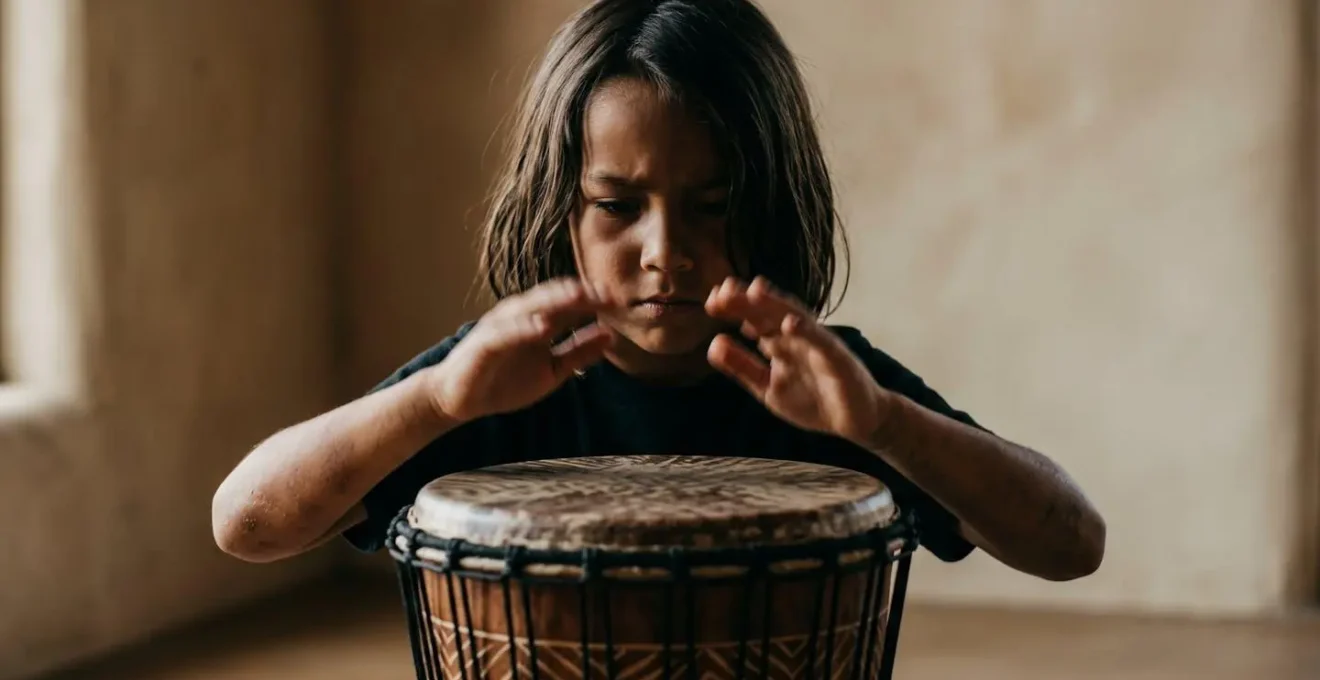
Playing a drum is also a full-body experience. It helps develop coordination, gross motor skills, and a strong internal sense of pulse. A child can feel the vibrations they create, connecting their physical action to the resulting sound in a very direct way. For « parental sanity, » while a drum set can be overwhelming, a single hand drum produces a resonant, earthy tone that is often far less piercing than a soprano recorder. It allows a child to release energy in a structured, creative way, and it’s an incredibly intuitive instrument for playing along with favorite songs, fostering a sense of rhythm and timing.
The 4-Hole Ocarina: Instant Melody Gratification
Often overlooked in the West but beloved in other cultures, the 4-hole pendant ocarina is a hidden gem in the world of beginner instruments. If your primary goal is to give your child the fastest possible path to playing a recognizable song, this might be the ultimate « confidence catalyst. » Made of durable plastic or ceramic, this small, palm-sized instrument is designed for instant success. With only four holes, the number of possible finger combinations is limited, which drastically simplifies the learning curve.
Unlike a recorder, which requires learning a whole sequence of fingerings for a simple scale, a 4-hole ocarina can often play a full major scale with a simple, sequential lifting of the fingers. This means a child can learn to play a dozen songs from a simple tablature diagram within a single afternoon. This level of instant melody gratification is incredibly powerful. It sidesteps the initial period of frustrating squeaks and squawks, and immediately delivers the joy of making music. The sound is typically soft, sweet, and flute-like, making it one of the more pleasant-sounding beginner wind instruments for a household.
When considering portability and durability, the ocarina stands out as a top contender. It’s an instrument that can easily be slipped into a pocket or worn as a necklace, ready for impromptu musical moments. The following table gives a practical comparison against other popular choices.
This comparative analysis of beginner instruments highlights the ocarina’s unique advantages in portability and ease of use.
| Instrument | Size/Weight | Durability | Travel-Friendly | Volume Level |
|---|---|---|---|---|
| 4-Hole Ocarina | Pocket-sized, 3-4 oz | High (ceramic/plastic) | Excellent | Moderate |
| Soprano Recorder | 12 inches, 2-3 oz | Moderate (plastic high, wood low) | Excellent | Moderate-High |
| Soprano Ukulele | 21 inches, 12-16 oz | Moderate (requires case) | Good | Soft |
For a child who might be easily discouraged by a steep learning curve, the ocarina provides a gentle and highly rewarding entry point into the world of melodic instruments.
Touch and Try: Letting Kids Handle Real Instruments Safely
After considering the theoretical pros and cons, the single most effective way to choose an instrument is to let your child lead the way. However, « letting them choose » doesn’t mean a chaotic trip to a music store or showing them endless YouTube videos. A much better approach is to create a controlled, low-pressure « touch and try » experiment at home. This method empowers your child and gives you invaluable observational data on what truly clicks for them, both physically and emotionally.
The goal is to observe their natural inclination. Which instrument feels good in their hands? Which one do they return to without prompting? Which one makes them smile? This isn’t about their ability to play it correctly; it’s about their curiosity and comfort. An instrument they are genuinely excited about is an instrument they will want to practice. This simple experiment transforms the decision from a parent’s guess into a child’s discovery, setting a positive tone for their entire musical journey.
Your Action Plan: The ‘Touch and Try’ Method
- Initial Exposure: Present 2-3 different instrument types (e.g., recorder, ukulele, hand drum) on a blanket, creating the first ‘point of contact’ without any commentary from you.
- Data Collection: For 15-20 minutes, allow your child to explore freely. Silently observe which instrument they hold the longest, which they try to make sounds with, and which they ignore.
- Coherence Check: As they handle each one, does their physical interaction look comfortable? Assess against key criteria: relaxed posture, easy reach for all parts, and a natural, non-strained grip.
- Emotional Resonance: Watch their face and listen to their sounds. Note which instrument elicits a genuine, unprompted smile or excited vocalizations, versus which one leads to sighs or signs of frustration.
- Action Plan: Based on which instrument they returned to most (your ‘priority’ candidate), make a no-pressure decision. Plan to revisit the instruments on another day to confirm their interest before committing to a purchase.
Who Wants This? Separating Your Dream from Their Desire
This may be the most challenging, yet most important, part of the process. As parents, we want the best for our children, and sometimes our own unfulfilled musical dreams can get wrapped up in their journey. Perhaps you always wished you had learned the violin, or you envision your child playing classical piano. These are beautiful aspirations, but they can inadvertently place a heavy burden on a six-year-old.
The success of this first musical experience hinges on intrinsic motivation—the child’s own desire to play. An instrument chosen to fulfill a parent’s dream, rather than one that sparks the child’s own joy, can quickly begin to feel like a chore. I’ve seen it firsthand in my classroom: the child who dutifully attends lessons for an instrument they have no connection with, and the child whose eyes light up because they get to play the instrument *they* chose. The difference in their progress and happiness is profound.
Your role at this stage is to be a keen observer. During the « touch and try » phase, consciously set aside your own preferences. Look for the signs of genuine connection. Does your child’s body language change when they pick up the ukulele? Do they seem captivated by the rhythm of the drum? Do they keep asking to try the ocarina again? These are the clues. Your enthusiasm should be for *their* enthusiasm, whatever form it takes. Celebrating their choice, even if it’s the « annoying » recorder you were hoping to avoid, sends a powerful message: « I value your interests. » This support is far more valuable than any specific instrument.
Key Takeaways
- The best first instrument provides a « quick win » to build a child’s confidence and motivation.
- A good « physical fit » is crucial; the instrument should be comfortable for a child’s small hands, breath capacity, and posture.
- Observing your child’s genuine, unprompted interest is more important than choosing the most « serious » or impressive instrument.
Is Your Child Ready for Formal Lessons? Signs of Mental Readiness
You’ve navigated the options, observed your child, and perhaps even made a purchase. Now comes the final question: is it time for formal, structured lessons? While enthusiasm for an instrument is a prerequisite, it isn’t the only factor. A child’s developmental readiness for the focus, instruction, and routine of lessons is just as important. Pushing lessons too early can extinguish the very spark you’ve been trying to nurture. Generally, music education specialists agree that the ages 6-9 marks the optimal period when children develop the necessary fine motor skills, attention span, and cognitive abilities for this kind of structured learning.
But age is just a number. A more reliable gauge is to look for specific signs of mental and physical readiness. Can your child focus on a single, preferred activity for 10-15 minutes? Can they follow simple, multi-step directions? How do they handle frustration when a task is difficult? Formal lessons require a degree of patience and resilience. A child who is ready can sit and listen to a teacher, try to replicate a demonstrated action, and persist through minor challenges with encouragement.
Before you sign up, try this informal « readiness assessment » at home. These are not pass/fail tests, but simple observations to help you gauge whether the structure of a weekly lesson will be a fun challenge or a frustrating burden for your child at this moment in time.
- Sustained Attention: Can your child focus on an engaging activity (like building with LEGOs or drawing) for at least 10 minutes without getting up or becoming distracted?
- Following Instructions: Can they follow simple 2-step directions, such as « First tap the drum lightly, then tap it loudly »?
- Frustration Tolerance: When they can’t immediately get a sound they want from the instrument, do they give up instantly, or are they willing to try again with your help?
- Intrinsic Interest: Do they pick up the instrument on their own to experiment, or is all musical play initiated by you? Self-motivated exploration is a very strong sign of readiness.
If you see these signs, it may be the perfect time to find a teacher. If not, don’t worry. The best course of action is simply to give them another six months of joyful, unstructured musical play at home and reassess later. Your goal is to foster a lifelong love of music, and that journey has no deadline.