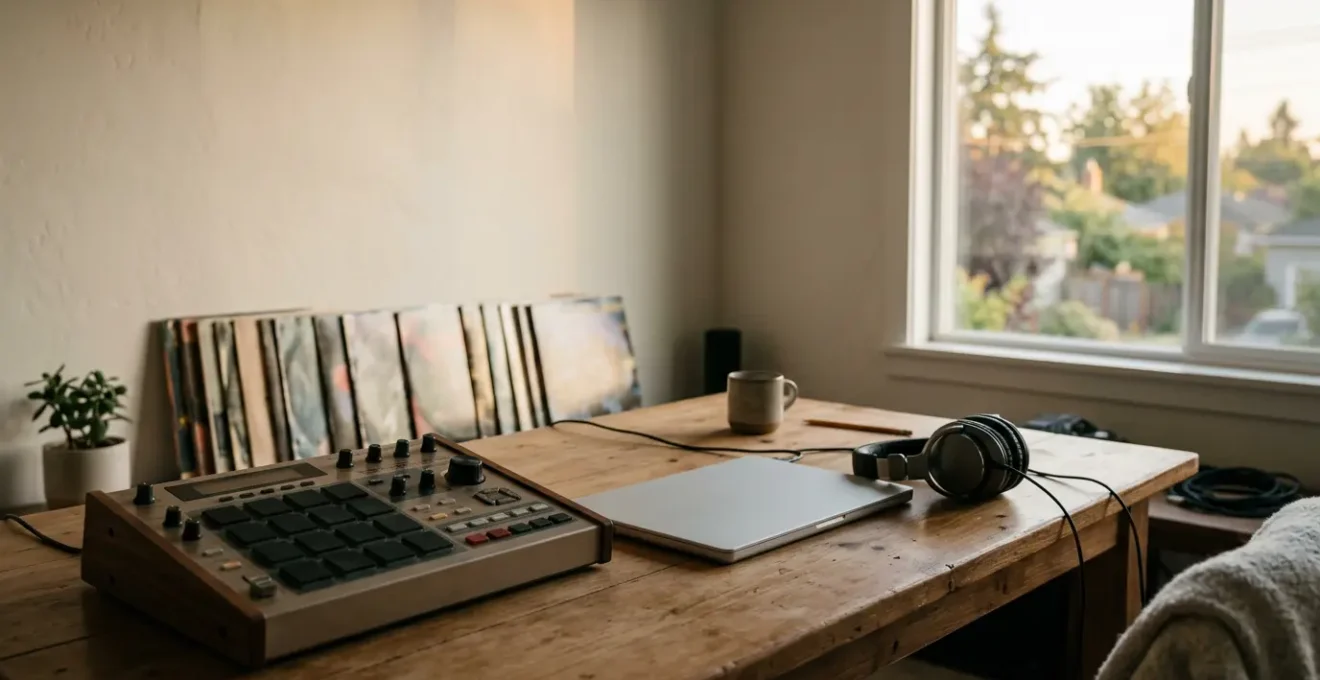
The debate between sampling and synthesis misses the point: crafting a killer hip-hop beat isn’t about the source of the sound, but the soul you inject into it through deliberate craftsmanship.
- Authenticity comes from the « human feel »—the intentional imperfections you program, not the perfection of the grid.
- Character is built from layers of texture and history, whether it’s through pre-cleared samples or aging your own sounds with digital patina.
Recommendation: Stop worrying about the tools and start thinking like a sonic sculptor, shaping every element to serve the groove.
Every aspiring producer hits the same wall. You’ve got the DAW, you’ve downloaded the drum kits, and you’ve watched the tutorials. You know you’re supposed to layer your drums and that sampling is a big part of the culture. But your beats still sound… robotic. Sterile. They lack the head-nodding, neck-snapping energy of the tracks you love. The eternal debate of sampling versus synthesis often distracts from the real secret. It’s not about where your sounds come from, but what you do to them.
The common advice is to just « get a better sample » or « find a better synth patch. » But that’s a dead end. The essence of hip-hop production isn’t about finding perfect sounds; it’s about taking any sound and giving it a human fingerprint. It’s about intentional imperfection. If the real key to a classic beat wasn’t the source material, but the soul imparted through techniques that channel a legacy of sonic craftsmanship? This isn’t just about making a beat; it’s about understanding the philosophy behind the groove.
This guide breaks down the core techniques that separate amateur beatmakers from true producers. We’ll move beyond the surface-level tips to explore the deliberate artistic choices that give a beat its character, from mastering the off-grid groove to sculpting your own percussion from the most unexpected sources. Get ready to transform your workflow from clicking buttons to crafting sound with intention.
In this deep dive, we’ll break down the essential techniques and mindsets needed to elevate your beat-making from a technical exercise to an art form. The following sections will guide you through the core principles of crafting beats with character and a definitive sonic footprint.
Summary: Crafting the Perfect Hip-Hop Beat
- The Dilla Feel: Quantizing Off-Grid for Human Groove
- Clearance Nightmares: Using Tracklib vs Ripping Vinyl
- Key Mapping: Making Sure Your Kick Drum Is in Tune with the Sample
- Snap, Clap, and Thud: Building a Snare that Cuts Through
- Bitcrushing and Tape Saturation: Aging Your Sound Digitally
- Glitch Beats: Sequencing Percussion from Door Slams
- Triplet Feel: How Jazz Swing Migrated to Hip Hop Shuffle
- How to Turn Kitchen Objects into Creative Sonic Art Using Sampling?
The Dilla Feel: Quantizing Off-Grid for Human Groove
The holy grail of hip-hop groove is that unquantized, « human » feel. And no one embodied this better than the legendary J Dilla. The mistake most producers make is thinking « unquantized » means random. It’s the opposite. It’s about intentional imperfection. Dilla didn’t just turn off the quantize; he was a master of micro-timing, using his MPC as an instrument to create a signature lurch and pull that felt alive. His drums sit in a liminal space between straight and swung, creating a tension that forces you to nod your head.
This isn’t just about applying a generic « swing » setting. While it’s known that Dilla often worked with a 53%-56% swing on eighth notes, the real magic was in his manual adjustments. As documented by music historian Dan Charnas in his book ‘Dilla Time,’ he would meticulously program beats on the grid and then deliberately nudge kicks late and snares early by just a few milliseconds. This juxtaposition of straight and swung elements within the same loop is what created his iconic « drunk » drummer feel. It’s a calculated sloppiness that gives the beat its breath and movement.
To achieve this, stop relying on your DAW’s quantize button. Program your main elements, then zoom in on the piano roll. Manually drag your snares a few ticks early and your kicks a few ticks late. Experiment with nudging hi-hats off the grid entirely. The goal isn’t chaos; it’s to create a subtle, almost subliminal push and pull that breaks the robotic perfection of the digital grid. This is where the tactile nature of beat-making comes alive, turning programming into a performance.
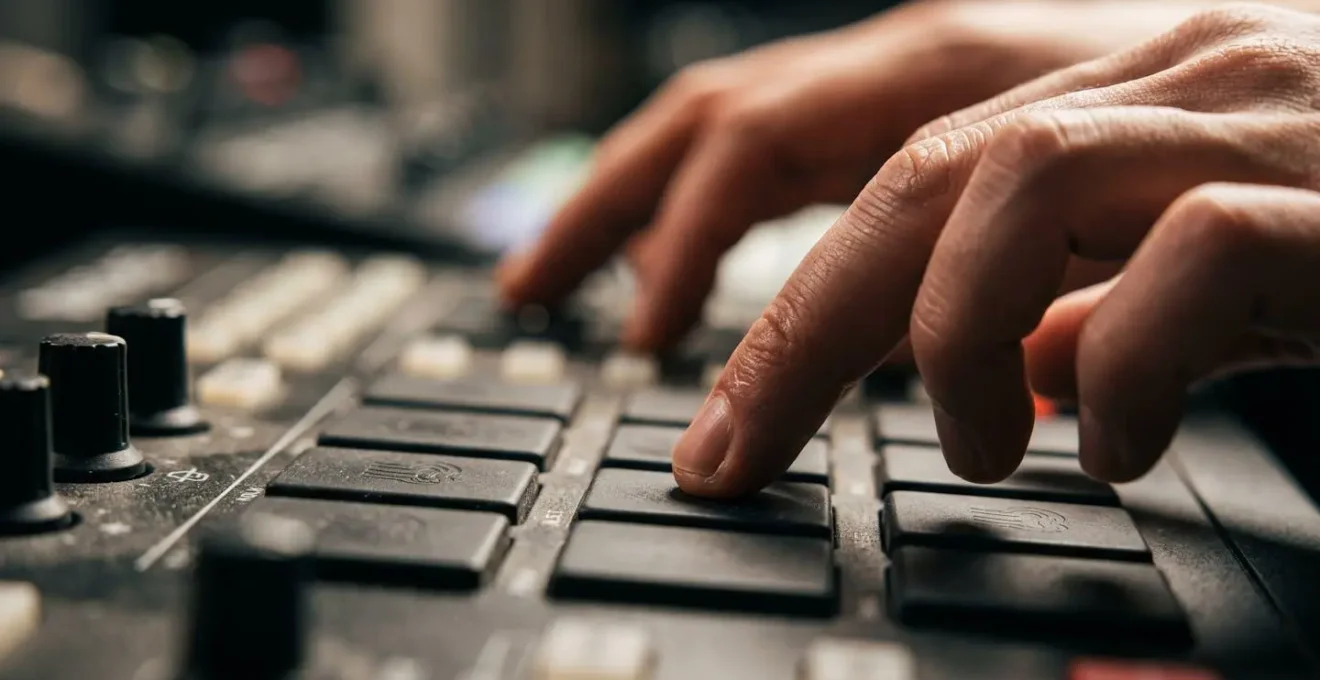
As you can see, the process is physical and intuitive. Your hands become an extension of your rhythmic ideas, making tiny adjustments that have a huge impact on the overall feel. It’s about listening, not just looking at the grid. Find the pocket. That’s the Dilla way. It’s a feel, not a formula, achieved through hands-on, deliberate choices.
Clearance Nightmares: Using Tracklib vs Ripping Vinyl
Crate digging is the romanticized foundation of hip-hop. The thrill of finding an obscure vinyl gem and flipping it into something new is undeniable. However, in the modern music industry, that romanticism can quickly turn into a legal and financial nightmare. Ripping a sample from a commercial record without permission is copyright infringement, period. If your track blows up, you could be facing a lawsuit that wipes out all your earnings and then some. The costs of clearing a sample from a well-known song can be staggering; industry sources indicate that clearing a recognizable hit can cost $10,000-$100,000 upfront, plus a hefty slice of your royalties.
This is where the game has changed. Services like Tracklib have emerged as a modern-day digital crate, offering a vast library of music that is pre-cleared for sampling. It’s a fundamentally different approach that trades the serendipity of dusty record stores for legal certainty and creative freedom within a curated ecosystem. While some purists might scoff, the practical benefits are impossible to ignore. You can browse, sample, and license a track in minutes, for a fraction of the cost and none of the legal headaches of traditional clearance.
The choice between ripping vinyl and using a service like Tracklib is a strategic one for any modern producer. It’s a trade-off between the unlimited, high-risk world of traditional sampling and the curated, risk-free environment of pre-cleared libraries. The right path depends on your goals, your budget, and your tolerance for risk. For aspiring producers looking to release music commercially, using a pre-cleared service is the smartest, safest way to build a career without the constant threat of a lawsuit.
The following table, inspired by information from platforms like Tracklib, breaks down the stark differences in the process, cost, and risk associated with each approach. This data clearly shows why pre-cleared sampling has become an essential part of the modern producer’s toolkit.
| Factor | Tracklib (Pre-Cleared) | Traditional Clearance |
|---|---|---|
| Upfront Cost | $50+ (90% of catalog) | $2,500-$10,000+ |
| Revenue Share | 2%-20% (based on length) | 25%-50%+ of royalties |
| Processing Time | Instant licensing | Weeks to months |
| Approval Rate | Guaranteed (pre-cleared) | Variable, can be denied |
| Legal Risk | None (licensed) | High if uncleared |
| Creative Freedom | Limited catalog | Any recording (if approved) |
Key Mapping: Making Sure Your Kick Drum Is in Tune with the Sample
One of the most overlooked yet crucial elements of a professional-sounding beat is tuning your drums. This is especially true for the kick drum. We often think of drums as purely rhythmic, but every drum hit has a fundamental pitch. When the pitch of your kick drum clashes with the root note of your bassline or your main sample, the entire track can sound muddy, dissonant, and amateurish. When they’re in tune, however, the low-end locks together with a powerful, resonant cohesion that you can feel in your chest.
The process is simple but transformative. First, identify the key of your main sample or bassline. Let’s say it’s C minor. The root note is C. Your goal is to make sure the fundamental frequency of your kick drum is also a C, or a harmonically related note like G (the fifth). Most modern samplers have a pitch or tune knob. Load your kick sample and play it alongside a simple sine wave or piano playing the root note. Adjust the pitch of the kick until you feel the two sounds « lock in » and stop fighting each other. You’ll notice the low-end suddenly becomes clearer and more powerful.
This principle of frequency sculpting applies to all your percussive elements, not just the kick. A snare, for example, has a distinct tonal character. While you may not tune it to the root note, ensuring it occupies a complementary harmonic space is vital. For instance, professional drum tuning standards show that a typical 14-inch snare batter head is often tuned in the 220-349 Hz range, corresponding to musical notes from A3 to F4. By pitching your snare sample to a third or a fifth of the track’s key, you can create a more musical and cohesive drum pocket. Tuning your drums is the secret ingredient that moves your beat from a collection of sounds to a unified, musical statement. It’s the foundation of a clean and powerful mix.
Snap, Clap, and Thud: Building a Snare that Cuts Through
A weak snare can kill an entire track. In hip-hop, the snare is the backbone, the crack of the whip that drives the backbeat. A single snare sample rarely has the perfect combination of body, attack, and texture to cut through a dense mix. The solution is layering: the art of building a custom snare from multiple sounds to create a unique and powerful sonic fingerprint. This isn’t just stacking sounds randomly; it’s a process of frequency sculpting, where each layer serves a specific purpose.
Think of it as constructing a sound from the ground up. You need three key components. First, « The Body, » which provides the weight and tone. This is often a snare with a strong fundamental in the 200-500Hz range. Next, « The Crack » or « The Snap, » which is all about the transient attack. This layer is typically a rimshot, a clap, or a sharp, high-frequency sound that lives in the 1-3kHz range. It’s what makes the snare pop and grab the listener’s attention. Finally, « The Sizzle » or « The Texture, » which is the high-frequency tail. This can be a splash of white noise, a short shaker sound, or the tail of a hi-hat, providing air and decay above 8kHz.
Case Study: Transient Shaping vs. Parallel Compression
To enhance a layered snare, producers often face a choice. Do you use a transient shaper or parallel compression? A recent audio engineering case study highlights the different roles these tools play. A transient shaper directly manipulates the sound’s envelope, allowing you to boost the initial « crack » by 10-15% without affecting the overall volume, preserving the punch. Parallel compression, on the other hand, adds weight and « thud. » By blending a heavily compressed copy of the snare with the original, you enhance the body and sustain of the sound without squashing the precious initial transient that the transient shaper helps define. The best workflow often involves using both: a transient shaper to define the snap, and parallel compression to add the body.
Once layered, the final steps are about gluing them together. Use EQ to carve out space for each layer to shine, and apply light compression to meld them into a single, cohesive sound. Always check for phase issues by zooming in on the waveforms and aligning the transients. A well-constructed layered snare is more than just a drum hit; it’s a signature piece of sound design that can define the entire character of your beat.
Action Plan: The Three-Layer Snare Construction Formula
- Layer 1 – The Body: Select a sample with warmth and resonance in the 200-500Hz midrange for depth and fullness.
- Layer 2 – The Crack: Add a rim shot or clap with sharp transient attack in the 1-3kHz range to define the backbeat.
- Layer 3 – The Sizzle: Include high-frequency texture from white noise, a shaker, or a hi-hat layer above 8kHz for air and presence.
- Phase Check: Zoom into the waveforms and align the start of the transients within 1-2 milliseconds to prevent phase cancellation and ensure maximum punch.
- Gluing: Apply light compression (2-4dB of gain reduction) to all three layers together to blend them while maintaining the punch of the transient.
Bitcrushing and Tape Saturation: Aging Your Sound Digitally
There’s a reason why the « golden era » of hip-hop has such a beloved sonic texture. The warmth, grit, and subtle distortion weren’t an artistic choice as much as a byproduct of the technology of the time: vinyl records, analog tape, and early digital samplers like the E-mu SP-1200 or Akai MPC60. These machines, with their limited bit depth and sample rates, imparted a distinct character on every sound they processed. In today’s hyper-clean digital world, our sounds can feel sterile by comparison. The art of digital patina is about using modern tools to intentionally recreate these pleasing imperfections.
This isn’t about simply slapping a « vinyl crackle » loop under your beat. It’s a multi-stage process of sonic degradation. The two key tools in this process are bitcrushers and tape saturation plugins. Tape saturation emulates the effect of recording to analog tape, adding harmonic warmth, gentle compression, and a slight rounding of harsh transients. It glues sounds together and adds a sense of weight and richness. Think of it as the first layer of warmth.
Bitcrushing and sample rate reduction are more aggressive tools that emulate the sound of vintage samplers. Reducing the bit depth (e.g., from 24-bit to 12-bit) introduces a specific type of quantization noise that adds grit and texture, especially to drum transients. Lowering the sample rate introduces aliasing artifacts—a unique digital distortion that can make hi-hats sound crunchy and synths sound gritty. The key is subtlety. A serial effects chain, where each stage adds a small amount of character, is far more effective than one heavy-handed effect. By blending these processed sounds with your clean, dry signal, you can achieve the perfect balance of vintage character and modern clarity.
This process is about adding a sense of history to your sounds. Like the wear and tear on a physical instrument, these digital imperfections tell a story. By mastering the tools of tape saturation, bitcrushing, and vinyl simulation, you can give your pristine digital sounds the warmth, grit, and soul of a crate-dug classic, crafting a unique digital patina that becomes part of your sonic fingerprint.
Glitch Beats: Sequencing Percussion from Door Slams
The philosophy of sampling at its most creative isn’t about looping a 4-bar phrase; it’s about seeing the musical potential in any sound. This is the essence of found sound and glitch production: building entire rhythmic and melodic structures from non-musical sources. A door slam, a car horn, a pen click—in the hands of a creative producer, these are not just noises, they are the raw materials for a drum kit. This approach forces you to abandon pre-made kits and think like a true sound designer.
The « One-Source Challenge » is a powerful exercise to develop this skill. Start by recording a single, interesting sound—a glass breaking, keys jangling, a book falling. The more complex the sound’s frequency content, the better. Then, load this single audio file into your sampler and begin the process of sonic dissection. This is where your EQ becomes a scalpel. Carve out the low-end « thump » of the sound to create your kick drum. Isolate a sharp, mid-range « crack » for your snare. Find a short, high-frequency « tick » or « hiss » and loop it to create your hi-hats. You are literally building a drum kit from the atoms of a single sound.
Once you’ve extracted your one-shots, the real creativity begins. Use your sampler’s ADSR envelope to shape each sound—tighten the decay of your hi-hat, lengthen the sustain of your kick. Pitch-map the different elements to create a musically coherent kit. The door slam kick might be tuned to the root note, while the cutlery-drawer snare is pitched to the fifth. Suddenly, your beat has a completely unique, organic cohesion that no commercial drum kit could ever provide. It’s a testament to the idea that with the right mindset, a producer doesn’t need an orchestra; the whole world is their sample library.
Triplet Feel: How Jazz Swing Migrated to Hip Hop Shuffle
The triplet-based shuffle that defines so much of modern hip-hop, particularly trap, isn’t a new invention. It’s the latest evolution in a long rhythmic lineage that traces its roots directly back to jazz. Understanding this rhythmic DNA is key to mastering the feel and programming it with authenticity. The connection is a direct result of the history of sampling. Early hip-hop pioneers in the 80s built their beats by looping drum breaks from 70s funk records. Those funk drummers, in turn, were heavily influenced by jazz, and their playing naturally contained the triplet-based swing rhythm of a jazz ride cymbal pattern.
Historical Evolution: The Unbroken Lineage of Swing
The rhythmic DNA of hip-hop’s triplet feel has a clear and traceable history. It began with early producers sampling funk drum breaks that already contained inherent swing from jazz-influenced drummers. The introduction of machines like the Akai MPC in 1988 allowed producers to programmatically replicate and exaggerate this « drunk » feel. This evolved over decades, culminating in the 2010s with the « Migos flow, » where hi-hats are programmed in rapid 32nd-note triplets. This signature trap shuffle is the direct descendant of those original jazz swing rhythms, connected by an unbroken lineage of sampling and reinterpretation.
Programming this feel effectively is about creating polyrhythmic tension. The classic technique is to build a foundation with your kick and snare on a straight 16th-note grid—solid, and right on the beat. Then, you introduce the tension by programming your hi-hats or shakers on a triplet grid (e.g., 1/16T). This creates a « 3-against-2 » polyrhythm that constantly pushes and pulls against the straight foundation, generating the hypnotic shuffle. The kick and snare provide the anchor, while the hi-hats provide the groove.
To make this feel human and avoid a robotic triplet pattern, the key is variation and humanization. Slightly nudge some of the triplet hi-hats off the grid by a few ticks. Automate the velocity so not every hit is the same volume. A great technique is to alternate between straight 16th-note hi-hats and triplet 16th-note hi-hats every two or four bars. This creates a dynamic build-up and release of rhythmic tension that keeps the listener engaged. It’s this interplay between the straight and the swung, the machine-perfect and the human-imperfect, that makes the hip-hop shuffle so powerful.
Key Takeaways
- True groove lies in « intentional imperfection, » not robotic precision. Manually shifting drums off-grid is a deliberate artistic choice.
- Modern production requires a strategic choice between the high legal risk of traditional sampling and the safety of pre-cleared libraries like Tracklib.
- A beat’s clarity and power come from harmonic cohesion; tuning your drums, especially the kick, to the key of the track is a non-negotiable step.
How to Turn Kitchen Objects into Creative Sonic Art Using Sampling?
The ultimate expression of the sampler’s art is transforming the mundane into the musical. When you stop seeing the world as just objects and start hearing it as a library of potential sounds, your creative possibilities become infinite. Your kitchen, for instance, isn’t just a place to cook; it’s a percussion orchestra waiting to be recorded. A heavy pot dropped on the floor has a resonant low-end thud perfect for a kick. The sharp, metallic slam of a cutlery drawer is a perfect snare. The rhythmic whisking of eggs or the shake of a salt container can be your hi-hats and shakers.
As Stealify Sounds notes in their guide on the topic, the art of sampling is about far more than just copying. As they put it:
Sampling extends beyond mere replication of original music; it’s about innovation and creativity. By layering up sounds and arranging the sections of a track, you can build complete beats with just a sampler.
– Stealify Sounds, Mastering Hip Hop Sampling Techniques
The process is a systematic mapping of sound. You become an acoustician, analyzing the frequency content of each kitchen sound. The goal is to capture a wide palette: low-frequency impacts for kicks, mid-range transients for snares, and high-frequency textures for hats and percussion. Don’t forget the ambience! Recording 30 seconds of the kitchen’s « room tone »—the hum of the refrigerator, the buzz of the lights—gives you a unique natural reverb that you can use with a convolution reverb plugin to place all your custom drum sounds in the same physical space, gluing them together organically.
Once recorded, the real work of frequency sculpting and envelope shaping begins. Use a high-pass filter to clean up low-end rumble from your snare and hat sounds. Apply compression to even out the dynamics of a chaotic utensil drawer slam. The final beat won’t sound like a kitchen; it will sound like *your* drum kit, infused with a completely unique character that no one else can replicate. This is the pinnacle of the sampler’s philosophy: the best instrument isn’t the most expensive one, but the one you create yourself with a discerning ear and a creative spirit.
Ultimately, the choice between sampling and synthesis is a false one. The real craft lies in your ability to take any sound—a synth patch, a vinyl loop, or a pot banging on the floor—and imbue it with character, groove, and soul. It’s about making deliberate, artistic choices to build a sonic world that is uniquely yours. Start by listening, then start sculpting.