In summary:
- Stop aimless « noodling » and adopt a structured, 30-minute system based on cognitive science, not just tradition.
- Focus on quality over quantity; targeted techniques like slow practice and interleaving are more effective than hours of mindless repetition.
- Use technology for objective feedback and a systematic cool-down to reinforce progress and build long-term motivation.
- Consistent, deliberate practice, even in short bursts, is the only path to genuine, long-term mastery of an instrument.
For most musicians, the gap between the desire to improve and the reality of a busy life is a source of constant frustration. You sit down with your instrument, full of good intentions, but the precious 30 minutes you’ve carved out dissolve into aimless noodling—playing familiar parts, repeating mistakes, and ending the session with no clear sense of progress. The common advice to « practice more » or « be consistent » feels hollow when the practice itself is ineffective.
The problem isn’t a lack of time; it’s a lack of system. Traditional practice often relies on brute force repetition, a method that is both inefficient and demotivating. But what if the key wasn’t simply playing more, but programming your brain more effectively? This guide moves beyond musical platitudes and into the realm of applied cognitive science. It presents a disciplined, results-oriented framework designed to turn 30 minutes of daily effort into measurable, permanent skill acquisition.
This isn’t about « finding more time. » It’s about maximizing the time you have. We will deconstruct the 30-minute session into a strategic sequence of targeted exercises, each designed to address a specific aspect of learning: technical precision, error correction, memory consolidation, and long-term motivation. Prepare to stop practicing and start training.
Summary: The 30-Minute Musician’s System for Peak Performance
- The 5-Minute Scale Routine: Waking Up Hands Before Repertoire
- Playing at 50% Speed: Why It Fixes Mistakes Permanently
- The Mirror of Truth: Using Your Phone to Hear Reality
- Randomizing Sections: Why Block Practice Is Less Effective for Memory
- Positive Reinforcement: Why the Last Thing You Play Sticks
- 15 Minutes a Day: Progressing Without Quitting Your Job
- Mindless Repetition vs Focus: Why 20 Minutes Can Beat 2 Hours
- The 10-Year Journey: What It Really Takes to Master an Instrument
The 5-Minute Scale Routine: Waking Up Hands Before Repertoire
The first five minutes of practice set the tone for the entire session. The goal is not to exhaust your technical facility but to deliberately activate the mind-body connection. A structured warm-up serves as a diagnostic tool, priming your hands, ears, and focus for the more demanding work to come on your repertoire. It’s a transition from the chaos of daily life to a state of focused musical intention. This isn’t about mindlessly running through every scale you know; it’s a targeted, mindful process.
This routine should be directly related to the music you are currently working on. By using the key signatures, articulations, and technical patterns from your piece, you are effectively doing double duty: warming up and practicing simultaneously. This approach transforms the warm-up from a generic chore into an integral part of the learning process, ensuring that every second of your limited time is spent on relevant material. The objective is to build a bridge between foundational technique and artistic application, starting from the very first note you play.
Your Action Plan: The 5-Step High-Efficiency Warm-up
- Begin with slow, mindful breathing while holding your instrument to establish focus and calm (30 seconds).
- Play the scale pattern from your current repertoire’s key at 50% tempo, listening for evenness and tension (2 minutes).
- Add varied articulations to the same scale—staccato, legato, and with dynamic changes from pp to ff (1 minute).
- Practice the specific arpeggio patterns found in your working piece, singing each note before playing it (1 minute).
- End with one slow, conscious run-through of the most technically demanding scale pattern in your piece (30 seconds).
Playing at 50% Speed: Why It Fixes Mistakes Permanently
The single most common enemy of progress is the ego-driven desire to play fast. Practicing a difficult passage at full speed is an attempt to perform it, not to learn it. When you play fast, you are relying on existing, often flawed, muscle memory. You reinforce your mistakes. Slowing down to 50% of the target tempo—or even slower—is a non-negotiable tool for deep learning. It lowers the cognitive load, allowing your brain to process every note, every movement, and every sound with conscious control. This isn’t just « slow practice »; it’s high-resolution practice.
This deliberate, slowed-down execution gives you the mental bandwidth to focus on the physical mechanics of playing. You can ensure every finger movement is precise, every shift is clean, and every breath or bow change is perfectly placed. This is where you correct the root cause of a mistake, not just its symptom. As Rodi Kirk, Director of Product & Education at Melodics, explains, this level of precision has a neurological basis.
Slowing things down in order to overcome mistakes is very important. When practicing music, this can feel very frustrating, when all you want to do is to speed things up, but practicing with this higher degree of precision ensures that you’re growing myelin in the right places.
– Rodi Kirk, Ableton Blog – The Science of Practice
This paragraph introduces the concept of practicing slowly for precision. To fully grasp the detail required, the image below highlights the physical connection between musician and instrument that can only be refined at slow speeds.
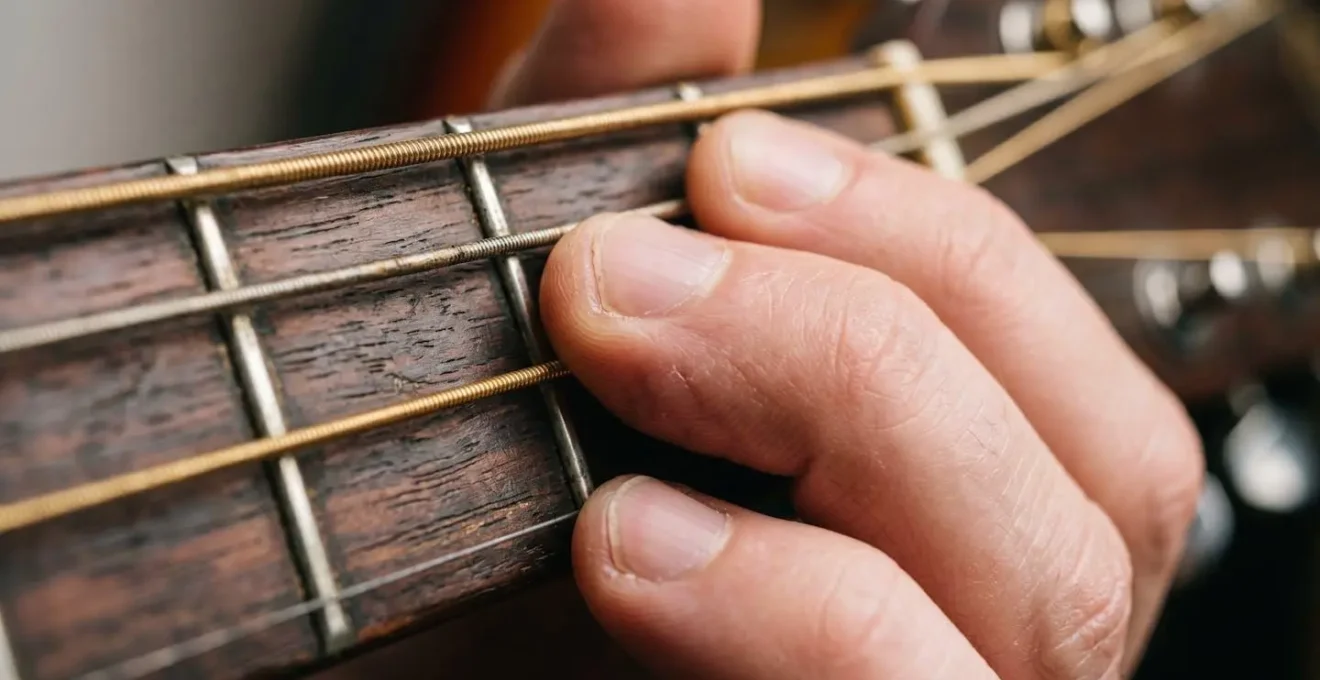
As you can see, the focus is on the exact point of contact. This is the level of detail you should aim for. By practicing slowly, you are not just learning the notes; you are building a robust, error-free neural pathway—the myelin sheath—for that passage. Each correct, slow repetition is a layer of insulation that makes the skill faster, more reliable, and permanent. When you speed the passage back up, the accuracy is built-in.
The Mirror of Truth: Using Your Phone to Hear Reality
Our perception of our own playing is notoriously unreliable. In the moment, our brain is so consumed with the physical act of producing sound that it cannot simultaneously act as an objective critic. We hear what we *intend* to play, not what is actually coming out of the instrument. This is where your smartphone becomes the most powerful and honest practice coach you will ever have. Recording yourself is the musical equivalent of looking in a mirror: it provides an unfiltered, undeniable feedback loop.
Listening back to a recording—even one made just moments before—creates a crucial psychological distance. It allows you to shift from being a performer to being a listener. Suddenly, the rushed passage, the out-of-tune note, or the inconsistent dynamics are glaringly obvious. This isn’t an exercise in self-criticism; it’s a diagnostic process. The goal is to identify the most significant problem, fix it, and record again. This iterative cycle of play-record-listen-correct is the fastest path to improvement. Instead of being overwhelmed, you should triage the errors. Focus on one category of mistake at a time: first pitch, then rhythm, then tone.
For example, if you hear a note error (wrong pitch), the problem is likely in your fingering or sight-reading. You must isolate that single measure, check the score, and practice the correct hand movement slowly. If you hear a rhythm error (uneven tempo), the problem is your internal pulse. This requires disciplined work with a metronome, starting at a tempo where you can play the rhythm perfectly, even if it feels absurdly slow. Finally, if you hear a sonic error (a harsh or weak tone), the issue is technical: your breath support, bow angle, or hand position. This requires isolating the physical action and refining it until the sound is clean and controlled. Each recording becomes a data point in your journey toward a solution.
Randomizing Sections: Why Block Practice Is Less Effective for Memory
The standard approach to learning a piece is linear: start at the beginning, play until you make a mistake, fix it, and continue. This is known as « blocked practice. » While it feels productive, it’s one of the least effective ways to build long-term, reliable memory. Blocked practice creates a fragile « chain » of memory where each section depends on the one before it. It’s why you can play a piece perfectly from the beginning but fall apart if you try to start in the middle. The more effective, brain-friendly method is called « interleaved practice » or « randomized practice. »
Interleaving involves breaking your piece into small, manageable chunks (e.g., sections A, B, and C) and practicing them in a random order (e.g., B, A, C, A, B…). This feels harder and more chaotic in the short term, but it forces your brain to work differently. Instead of relying on muscle memory to flow from one section to the next, your brain must actively retrieve the information for each chunk independently. This act of effortful retrieval strengthens the memory trace significantly. The data is clear: research on practice schedules reveals that interleaved practice is often more than twice as effective as blocked practice for skill retention and performance.
Case Study: The Clarinet Interleaving Experiment
This was demonstrated in a study with ten advanced clarinetists who practiced pieces using either a blocked schedule (12 straight minutes) or an interleaved schedule (alternating 3-minute segments). When professional clarinetists rated the blind recordings, the pieces practiced with the interleaved schedule consistently received higher performance ratings. The musicians themselves also reported that the interleaved method improved their goal setting, focus, and ability to identify mistakes.
In your 30-minute session, this means you should spend time jumping between the different sections you’re working on, rather than hammering away at one section for 15 minutes straight. It builds a more robust and flexible command of the material, making you less likely to be derailed by a minor slip-up during a real performance.
Positive Reinforcement: Why the Last Thing You Play Sticks
The end of your practice session is neurologically the most important part. How you feel in the final moments has a disproportionate impact on your memory of the entire session and your motivation to return the next day. This psychological phenomenon is known as the « Peak-End Rule. » It’s a cognitive shortcut our brains use to summarize experiences.
As Nobel Prize-winning psychologist Daniel Kahneman discovered, we don’t remember experiences as an average of their quality. Instead, our memory is powerfully shaped by the most intense moment (the peak) and the very end. If you end your session on a note of frustration—battling a passage you can’t conquer—your brain will label the entire 30 minutes as a negative experience, making it harder to get yourself to practice tomorrow. The disciplined musician deliberately engineers a positive end to every session.
Our memory of an experience is disproportionately shaped by its most intense moment (the peak) and its end. People judge an experience largely based on how they felt at its peak and at its end, rather than based on the total sum or average of every moment of the experience.
– Daniel Kahneman, Peak-End Rule research
This means the last three minutes of your practice are not for tackling new challenges. They are for consolidation and reinforcement. You must conclude by playing something you can execute well, guaranteeing a feeling of success. This strategic cool-down closes the « learning loop » on a high note, telling your brain that practice is a rewarding activity.
- Minute 1: The Victory Lap. Play a short passage that you have already mastered. Something you can play flawlessly and beautifully. This guarantees you end with a feeling of competence.
- Minute 2: The Mental Win. Put your instrument down. Mentally review and verbally acknowledge one specific improvement you made during the session, no matter how small. (« Today, I finally nailed the shift in measure 16. »)
- Minute 3: The Next Mission. Write down a single, specific, and measurable goal for tomorrow’s practice. Not « work on the concerto, » but « play measures 20-24 at 60 bpm with correct dynamics, 3 times in a row. »
15 Minutes a Day: Progressing Without Quitting Your Job
The myth of the « 8-hour-a-day » practice session is not only impractical for most people, it’s also scientifically unsound. The pursuit of mastery is not a function of raw hours logged, but of the quality and consistency of focused effort. For the time-crunched musician, the goal is not to find an extra four hours, but to maximize the impact of 15 or 30 minutes. This shift in mindset from quantity to quality is liberating and, more importantly, it’s backed by research.
Our ability to maintain intense focus is a finite resource. After a certain point, we enter a state of diminishing returns where we are simply reinforcing bad habits and building fatigue. Studies on expert performers across various fields consistently show that concentrated, deliberate practice is most effective in shorter, focused bursts. In fact, research on practice duration indicates that there is often little benefit from practicing more than 4 hours per day, with performance gains actually starting to decline after the 2-hour mark.
For someone with a job, a family, and other commitments, this is excellent news. It confirms that a shorter, highly structured session can be more productive than a long, unfocused one. Two focused 15-minute sessions—one in the morning and one in the evening—will yield far greater results than a single, exhausted 60-minute session at the end of the day. The key is consistency. Progress is built brick by brick, through the daily habit of showing up and engaging in focused work, not through occasional, heroic marathon sessions.
Key Takeaways
- System Over Hours: Success comes from a structured, cognitively-aware system, not from logging more aimless practice time.
- Practice with Precision: Techniques like extreme slow practice and using recordings for feedback are non-negotiable tools for building permanent, error-free skills.
- Hack Your Brain: Use principles like interleaving (randomized practice) and the Peak-End Rule (positive endings) to improve memory retention and long-term motivation.
Mindless Repetition vs Focus: Why 20 Minutes Can Beat 2 Hours
Not all practice is created equal. The distinction between « practicing » and engaging in « deliberate practice » is the difference between stagnation and growth. Two hours of mindless, distracted repetition—playing through a piece while thinking about dinner or checking your phone—is less valuable than 20 minutes of intense, focused, goal-oriented work. Mindless repetition simply reinforces existing habits, good or bad. Deliberate practice systematically rebuilds them for the better.
Deliberate practice has three defining characteristics. First, it is highly specific, with a clearly defined goal for every task (e.g., « achieve perfect intonation on the G string in measures 9-12 »). Second, it is intensely focused, requiring your undivided attention. Third, it involves a constant, immediate feedback loop, where you actively monitor your performance, identify errors, and correct them in real-time. This is hard work. It’s mentally taxing and not always « fun » in the conventional sense, but it is the only thing that works. A meta-analysis across all major domains found that deliberate practice explained 21% of the variance in music performance—a massive contribution.
This portrait captures the intensity of a musician engaged in deliberate practice. It’s a state of deep concentration, far removed from casual playing.
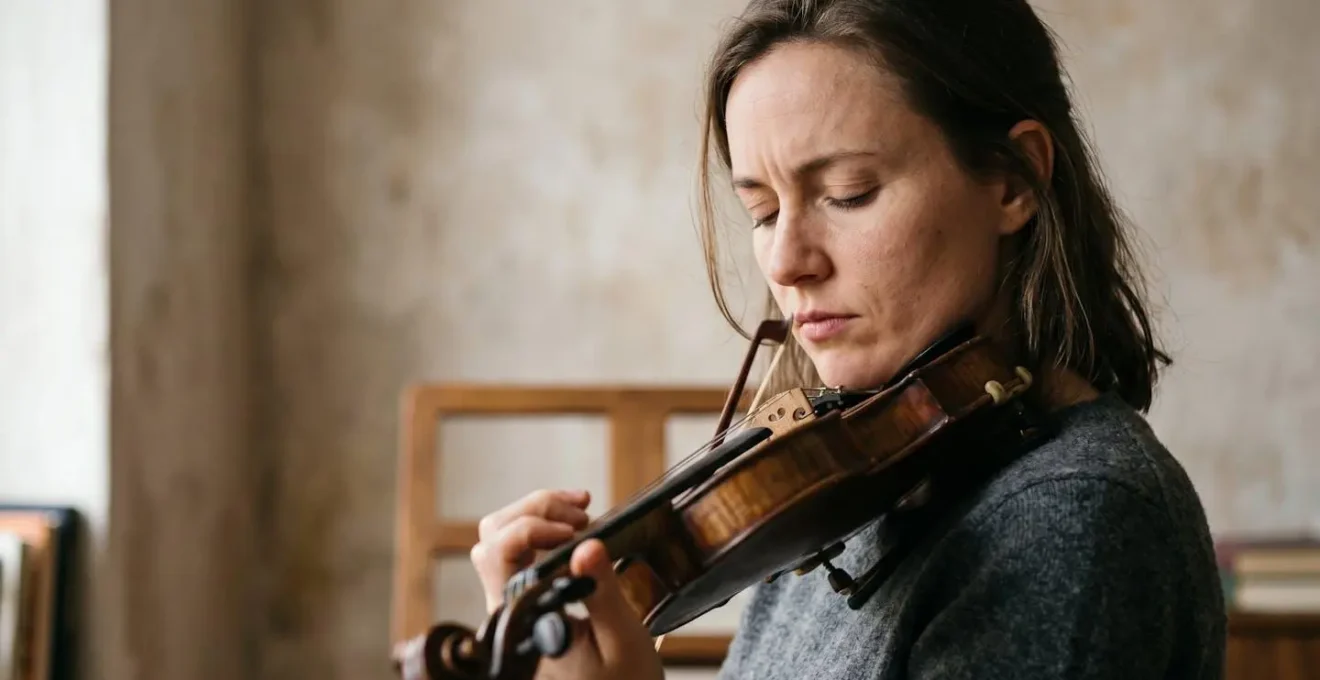
Achieving this state of focus within your 30-minute window is paramount. It means creating a sanctuary for your practice. Put your phone in another room (unless you are using it to record). Close the door. Eliminate all potential distractions. Your goal is to transform your 30 minutes from a casual activity into a high-intensity cognitive workout. It’s this intensity of focus, not the duration, that drives neuroplasticity and leads to rapid skill development.
The 10-Year Journey: What It Really Takes to Master an Instrument
The 30-minute daily practice is a tactical tool, but its true power is realized when placed within a strategic, long-term vision. The path to mastery is a marathon, not a sprint. The infamous « 10,000-hour rule, » while often oversimplified, points to a fundamental truth: expertise is not born, it is built through a staggering amount of sustained, deliberate effort. For a musician, the numbers are even more daunting.
Expertise research consistently shows that it requires at least 10 years and/or 10,000 hours of deliberate practice to reach an expert level of performance, and often closer to 25 years to attain an elite, international standing. Faced with such numbers, it’s easy to feel discouraged. How can a mere 30 minutes a day possibly make a difference? This is where the power of compounding and consistency comes into play. That small daily habit, when maintained over years, accumulates into a formidable body of work.
Let’s do the math. 30 minutes a day, 365 days a year, for 10 years, equals 1,825 hours of focused practice. Suddenly, the goal of mastery is no longer an abstract fantasy; it becomes a tangible outcome directly tied to the daily habit. Your 30-minute session is not just about fixing a passage for tomorrow; it is a deposit into your long-term « mastery account. » This perspective transforms the daily session from a chore into a meaningful step on a much larger, more rewarding journey. It is the most realistic and sustainable path for anyone who wants to integrate a high level of musicianship into a balanced life.
The journey is long, but it begins with a single, well-structured session. By applying these principles, you are not just practicing; you are investing in your future self as a musician. The next step is to put this system into action today.